Lat Pulldown Machine Workout Plan: Build a Balanced Back Day
Make the lat pulldown the anchor of a balanced workout—not the whole plan. Use this two-day template, learn how to choose a comfortable setup, and adapt around the equipment you have.
In this article
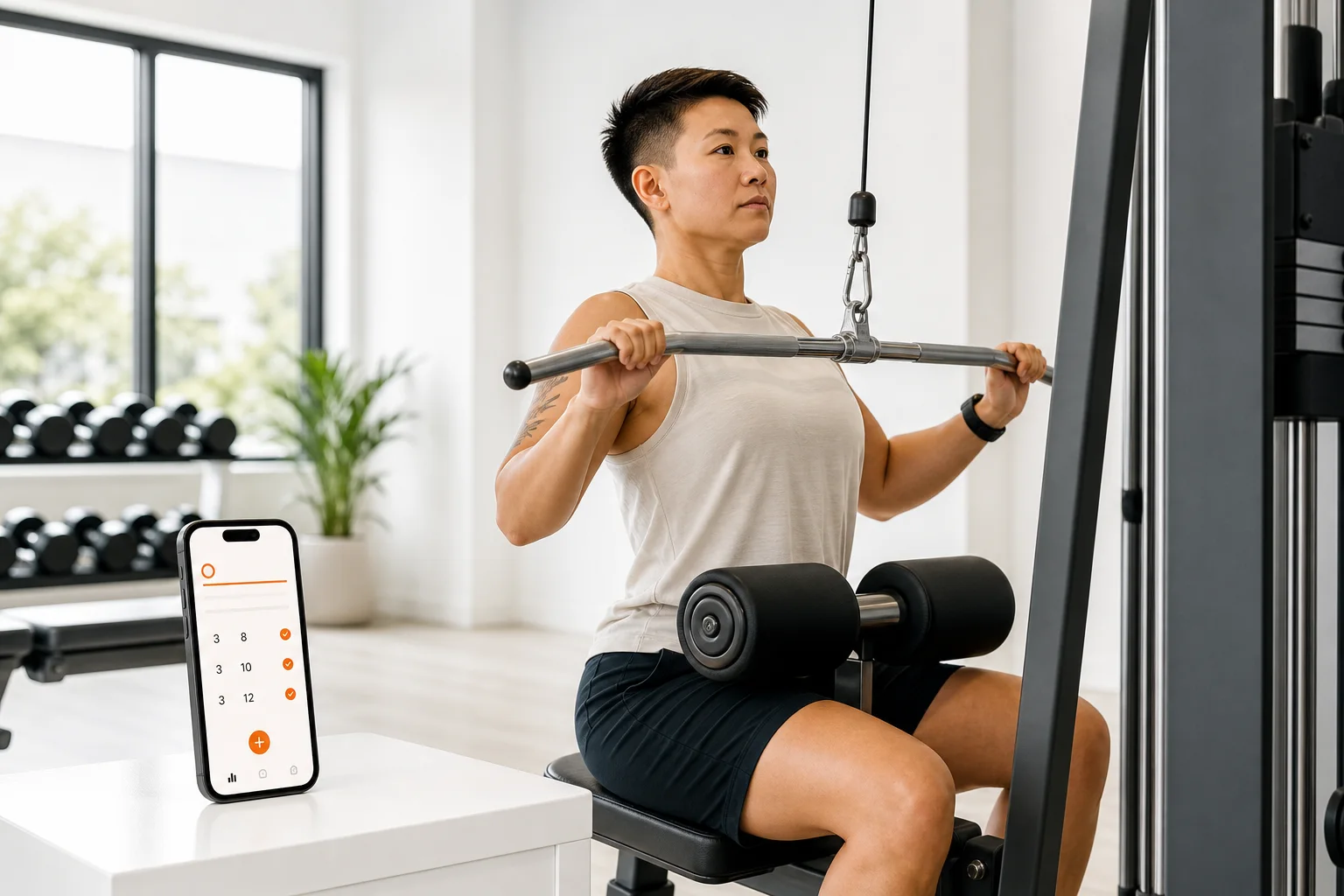
A useful lat pulldown machine workout plan does more than repeat pulldowns. It pairs a vertical pull with a row, includes movements for other major muscle groups, and gives you a straightforward way to progress. That makes the workout easier to balance and adapt when a station is busy or your gym has different equipment.
Use the plan below as a practical starting point. Choose loads you can control, keep the movement comfortable, and adjust the exercises to fit your experience and available machines.
What the lat pulldown contributes to a workout
The lat pulldown is a vertical pulling exercise: you pull a handle down from overhead toward your upper chest while seated. Your back and arms work together to move the load. A row complements it by bringing the arms back toward the torso from in front of you, so including both gives your workout two different pulling patterns.
The pulldown is not a complete back workout by itself. A balanced session can also include a lower-body movement, a push, and a trunk exercise. You do not need a separate machine for every body part; select exercises that suit your goals, skill, and gym setup.
Lat pulldown machine workout plan: a two-day template
Try these sessions on two nonconsecutive days if that fits your weekly schedule. The set and rep ranges are practical starting points, not rules. If you are new to resistance training, begin with fewer sets and focus on learning the movements.
Day A: full-body emphasis
- Lat pulldown: 2–3 sets of 8–12 reps
- Leg press or goblet squat: 2–3 sets of 8–12 reps
- Chest press machine or push-up: 2–3 sets of 8–12 reps
- Seated cable row or chest-supported row: 2 sets of 8–12 reps
- Dead bug or another controlled trunk exercise: 2 sets of 6–10 reps per side
Day B: repeatable full-body variation
- Lat pulldown variation: 2–3 sets of 8–12 reps
- Hip hinge, such as a dumbbell Romanian deadlift: 2–3 sets of 8–12 reps
- Shoulder press machine or dumbbell press: 2–3 sets of 8–12 reps
- Single-arm cable row or another row variation: 2 sets of 8–12 reps per side
- Split squat or step-up: 2 sets of 8–10 reps per side
Rest long enough between sets to perform the next set with good control. Around one to three minutes is a workable range for many exercises; take more time if you need it. A session with fewer exercises is still useful when your schedule is tight. For ideas on keeping a week manageable, see the two-day machine-only workout plan.
Set up and perform the pulldown with control
- Adjust the seat and thigh pad. Sit securely with your thighs supported, feet stable, and the bar within a comfortable reach. Ask gym staff for help if the adjustments are unfamiliar.
- Choose a comfortable grip. Start around shoulder-width or slightly wider. A close neutral-grip handle is another option if the station has one and it feels comfortable. Grip choice is not a test; use a setup that lets you control the full movement.
- Set your torso. Sit tall with a slight, steady lean if needed. Avoid turning each rep into a large backward swing.
- Pull the bar in front of you. Guide it toward your upper chest while bringing your elbows down. Do not pull the bar behind your neck.
- Return smoothly. Let your arms rise under control until you reach a comfortable overhead stretch. Avoid letting the weight stack crash between reps.
Use a load that lets you repeat the same basic motion without jerking, shortening the range dramatically, or leaning farther back as the set goes on. If the movement causes pain, stop and choose a comfortable alternative or ask a qualified professional for guidance.
How to choose exercises around available equipment
A busy gym or a different branch does not have to derail your plan. Keep the movement pattern in mind and choose a practical substitute rather than waiting indefinitely for one specific station.
- No pulldown station available: If you have access to an assisted pull-up machine or a suitable resistance band, use a controlled vertical-pull variation. If neither is available, do a row and resume the pulldown another day.
- The pulldown is occupied: Start with a row, then return to the pulldown later. You can also swap the order if that suits your session.
- No cable row station: Try a chest-supported dumbbell row, a one-arm dumbbell row, or a machine row if available.
- Limited machines: Pair one available machine with dumbbell or body-weight movements that cover other movement patterns. The equipment-matching workout guide offers more ways to make that choice.
Keep the substitute close to the original exercise’s role in your plan. For example, swapping one vertical pull for another is a closer match than replacing it with a leg exercise. You can also simplify the week with a machine-only routine if machines are your preferred setup.
Progress without changing everything at once
Record the load, reps, and sets you complete. When you can perform the top of your chosen rep range across all sets with steady technique, consider a small increase in resistance next time. If the next machine increment feels too large, keep the load and build a rep or two first.
Progress does not have to mean adding weight every session. You might gradually improve your control, complete an extra rep, or make the workout more consistent. Change one variable at a time so it is easier to judge how the adjustment feels. For a more detailed logging approach, read the progressive overload plan.
Make the plan fit your actual gym week
Before each workout, check what equipment you can use and note any substitutions. In GymPT, you can build a program manually without AI credits and save training records with a free account. Optional AI support can help with planning, but some actions require credits, and eligible Premium features have their own requirements displayed before use.
If you work with a personal trainer, you can review and save a program proposal they prepare. Your trainer can review only the programs, workout records, and notes you permit them to see. Use that shared information to discuss whether the pulldown setup, exercise choices, or schedule need adjusting; the app supports the coaching conversation rather than replacing your trainer’s judgment.
The best version of this plan is one you can repeat and adapt. Start with a manageable number of exercises, use a pulldown variation that feels controlled, and track enough detail to make your next session easier to plan.