6 Day Machine Only Workout Plan: A Balanced Weekly Routine
Build a six-day routine around the machines your gym actually has. This plan balances upper- and lower-body sessions, repeatable progress, and recovery.
In this article
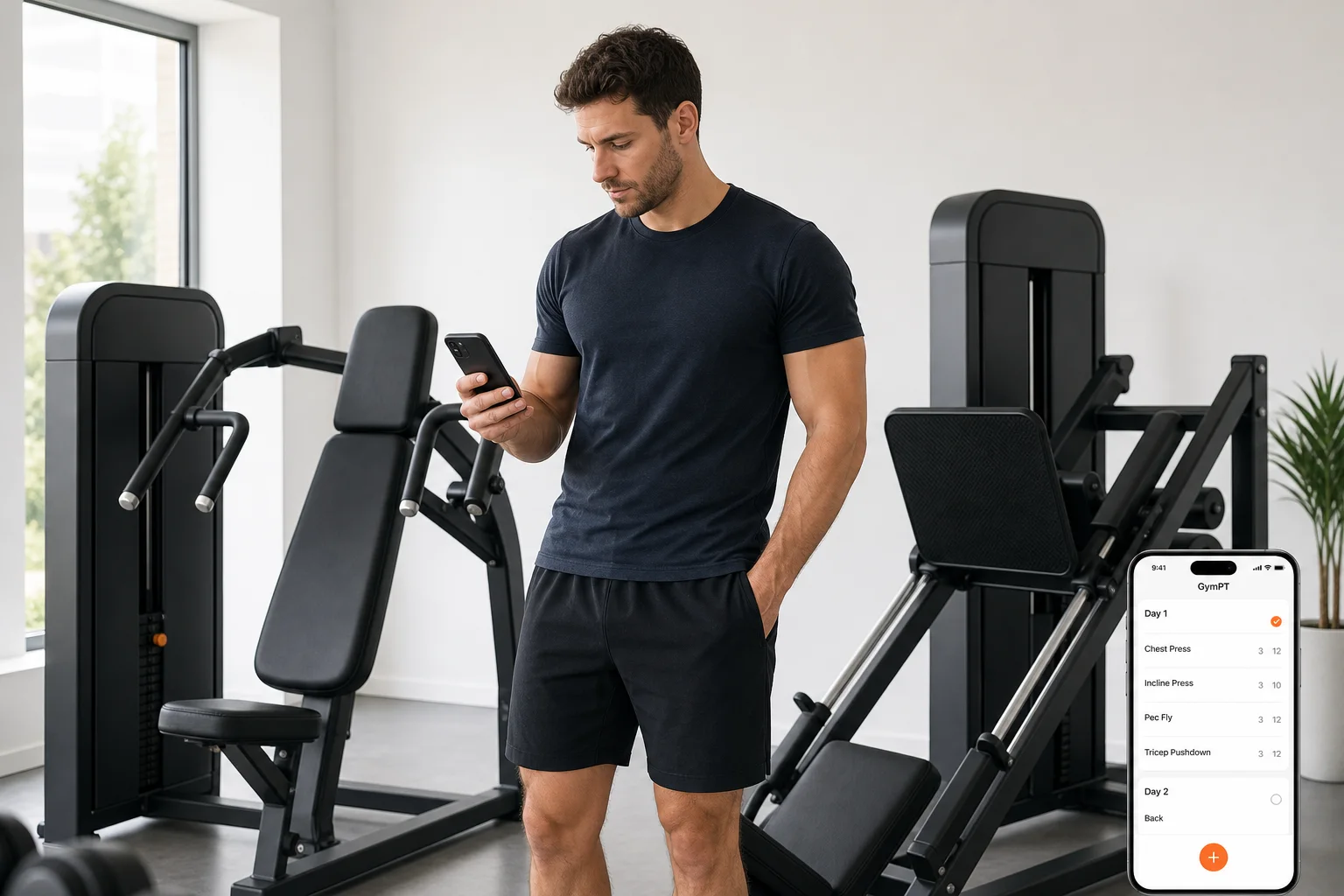
A 6 day machine only workout plan can help you organize a week of strength training without relying on dumbbells or barbells. The key is not to cram every exercise into every visit. Instead, use a repeatable split that trains each major area twice, leaves room for recovery, and lets you swap in machines your gym actually has.
Six training days are a scheduling choice, not a requirement for progress. If you are new to lifting, returning after a long break, or unsure you can recover from frequent sessions, start with fewer days and build gradually. This example is designed for generally healthy adults who already tolerate regular resistance training. Adjust it to your experience, goals, available equipment, and how you feel between sessions.
How to use this 6 day machine only workout plan
The weekly structure uses a push, pull, and legs split repeated twice. That gives each area two opportunities to train, while the two rest days help break up the week. Machines can be useful for a machine-only routine because they provide a set movement path, but the setup still needs to fit your body and allow controlled, comfortable movement.
- Day 1: Push A — chest, shoulders, and triceps
- Day 2: Legs A — quad emphasis
- Day 3: Pull A — back and biceps
- Day 4: Rest or easy activity
- Day 5: Push B — chest, shoulders, and triceps
- Day 6: Legs B — hamstrings and glutes
- Day 7: Pull B — back and biceps
If your calendar works better with rest after Day 6, move Pull B to the next day and take the following day off. Keep the order consistent enough to notice progress, but do not treat the weekdays as fixed. For a shorter weekly plan, see this two-day machine-only full-body routine.
The six-day machine workout schedule
For most exercises, begin with 2 sets of 8–12 controlled repetitions. If you have been training consistently and recover well, use 3 sets for the first one or two exercises of a session. For lateral raises, reverse flyes, and similar smaller-muscle movements, a set of 10–15 reps can be a practical option. Choose a load that makes the last few repetitions challenging while you can still keep good control.
Day 1: Push A
- Machine chest press — 3 sets of 8–12
- Seated shoulder press — 2 sets of 8–12
- Machine lateral raise — 2 sets of 10–15
- Triceps press-down on a cable machine — 2 sets of 10–15
Set the chest press so the handles begin around mid-chest, and keep your shoulders relaxed rather than shrugging. If the shoulder press does not feel comfortable with the available machine, reduce the range of motion or use a chest-supported machine that suits your movement better.
Day 2: Legs A — quad emphasis
- Leg press — 3 sets of 8–12
- Leg extension — 2 sets of 10–15
- Seated leg curl — 2 sets of 8–12
- Calf raise machine — 2 sets of 10–15
Use a leg-press range you can control without your lower back rounding away from the pad. Adjust the seat and foot position according to the machine instructions and a comfortable range—not to chase a particular depth at the expense of control.
Day 3: Pull A
- Lat pulldown machine — 3 sets of 8–12
- Seated row machine — 3 sets of 8–12
- Reverse fly machine — 2 sets of 10–15
- Biceps curl machine — 2 sets of 10–15
Choose a pulldown grip and a row setup that let you move smoothly. Avoid turning a row into a full-body rocking movement. If your gym has more than one row or pulldown machine, you can use a different handle or seat position on the second pull day.
Day 4: Rest
Take a rest day from resistance training. A walk or other easy movement is optional if it fits your routine. Use this day to notice whether you feel ready for the next session; persistent fatigue is a reason to reduce sets, take an extra rest day, or revisit the weekly schedule.
Day 5: Push B
- Incline chest press machine — 3 sets of 8–12
- Pec deck or chest fly machine — 2 sets of 10–15
- Machine lateral raise — 2 sets of 10–15
- Overhead triceps extension on a cable machine — 2 sets of 10–15
Use a modest load on flyes and keep the movement controlled. If your gym does not have an incline press, use its standard chest press. There is no need to add extra exercises just because a machine is available.
Day 6: Legs B — hamstrings and glutes
- Seated or lying leg curl — 3 sets of 8–12
- Hip thrust or glute-drive machine — 3 sets of 8–12
- Leg press — 2 sets of 10–12
- Calf raise machine — 2 sets of 10–15
If there is no hip thrust machine, choose a second machine that trains the glutes, such as a suitable glute kickback machine. If that option is unavailable too, use a leg press setup that you can perform comfortably. Keep the session simple rather than improvising with equipment you cannot adjust or use confidently.
Day 7: Pull B
- Chest-supported row machine — 3 sets of 8–12
- Lat pulldown machine with a different comfortable grip — 2 sets of 8–12
- Reverse fly machine — 2 sets of 10–15
- Biceps curl machine — 2 sets of 10–15
That finishes the cycle. Take a rest day before starting again, or shift the plan to fit your week. You can review a gym equipment workout plan matched to what is available for more ideas when a particular machine is missing.
Choose machines that fit, then progress gradually
Before a working set, adjust the seat, pad, and range of motion using the machine’s instructions. Start with a light practice set. The movement should feel controlled, and the machine should not force you into a position that feels unsuitable. Ask gym staff or a qualified trainer for help if you are unsure how to set up a machine.
Rest long enough between sets to perform the next one with control. A practical starting point is about 1–2 minutes for smaller exercises and 2–3 minutes after demanding leg presses or presses; take more time if you need it. These are flexible guideposts, not a timer test.
Keep a record of the machine, seat or setup adjustments, load, and completed reps. When you can complete the top of your chosen rep range with consistent form across all sets, consider a small increase in load at a future session. If the next weight jump is too large, stay at the current load and build cleaner repetitions first. For more on this approach, read our progressive overload guide.
Adapt the plan to your gym and your week
Machine names and designs vary between facilities. Match the movement pattern rather than insisting on one exact model: a chest press trains a horizontal push, a row trains a horizontal pull, a pulldown trains a vertical pull, and leg extensions or curls focus on knee extension or flexion. A cable station can count as machine equipment when you use its pulley setup and attachment.
- No incline chest press? Use the standard chest press, or choose a second chest machine with a different comfortable setup.
- No reverse fly machine? Use a cable station set for a controlled reverse fly if available.
- Busy gym? Substitute a nearby machine that trains a similar movement instead of waiting through your whole session.
- Short on time? Do the first three exercises and leave the smaller-muscle movements for another day. A repeatable shorter session is better than a schedule you regularly abandon.
- New to six weekly sessions? Start with one pass through push, legs, and pull, then add sessions only if the schedule and recovery feel manageable.
Research comparing machines and free weights does not establish that one format is universally best for strength or muscle growth. The practical choice is the equipment you can set up, use consistently, and progress with appropriate effort. Adults are generally advised to include muscle-strengthening activity on at least two days per week; six machine sessions are an optional structure, not a minimum requirement.
Make the plan yours with GymPT
GymPT can help you keep this routine organized around the machines you can access. You can create a manual program without AI credits and save training records with a free account. Optional AI support may use credits, and eligible Premium features have separate requirements shown before use.
If you work with a personal trainer, they can prepare a program proposal manually or with AI in the GymPT web workspace. You decide whether to review, save, and use a proposal. Trainers can review only the programs, workout records, and notes you permit them to access. For tips on keeping your training log useful, see our guide to building a workout log.
Start with a version you can repeat. Choose machines that fit your gym, keep a few setup notes, and make gradual changes based on your records and how the sessions are going. If six days turns out to be too much, reduce the frequency; the right plan is one you can follow consistently.