Beginner Workout Split: Choose a Simple Weekly Plan
A good beginner workout split is one you can repeat. Compare two- and three-day schedules, try a simple full-body template, and learn how to progress without adding too much too soon.
In this article
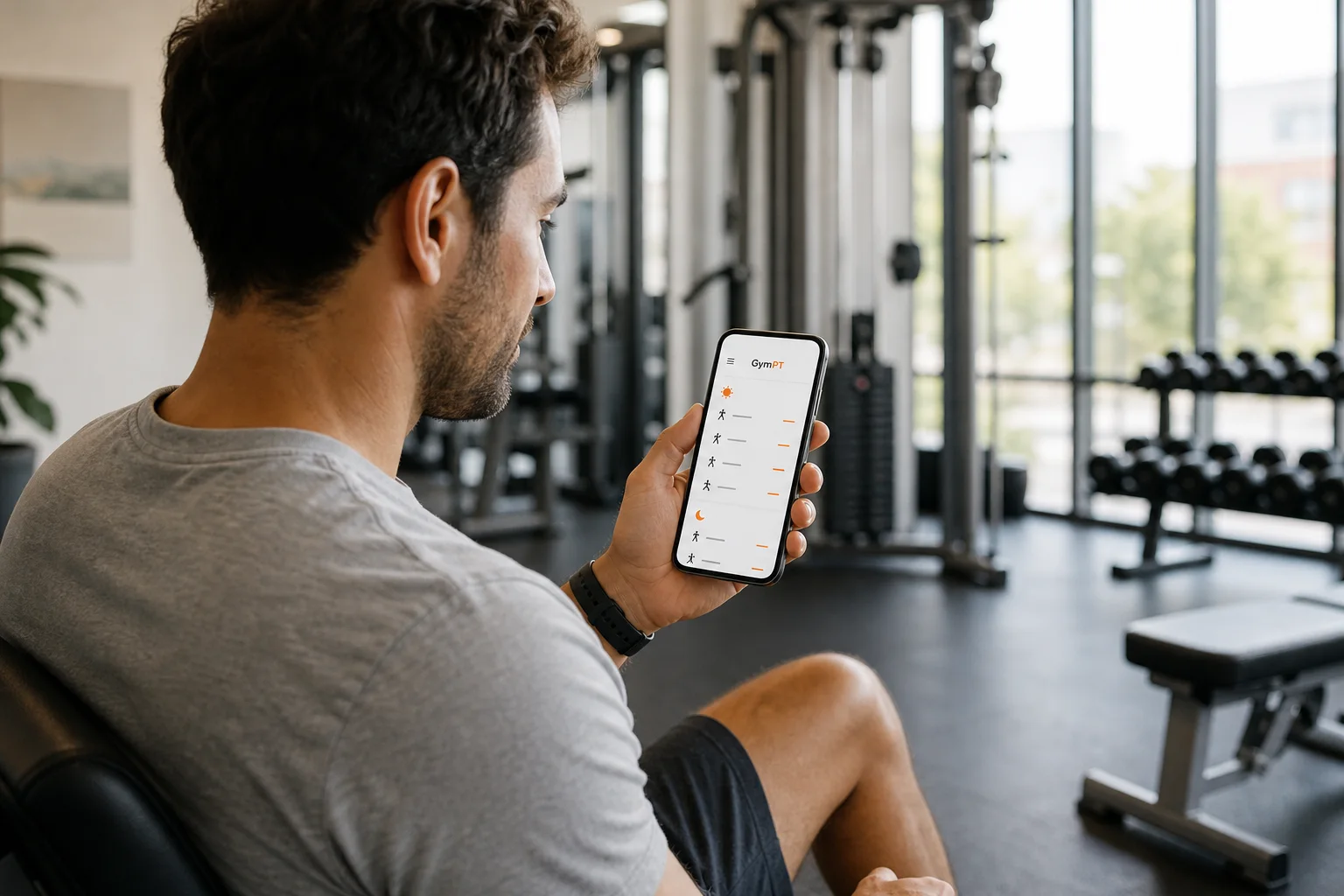
A beginner workout split is simply a way to arrange your training across the week. You do not need a complicated body-part schedule or a gym visit every day to get started. For most new lifters, the useful first question is whether two or three strength sessions fit your actual routine—and whether you can repeat that schedule consistently.
This guide compares two simple options, gives you a practical full-body template, and explains how to progress without rushing to heavier weights. The aim is a repeatable starting point, not a perfect program.
What makes a beginner workout split work?
A useful beginner split covers the major movement patterns, leaves room between sessions, and is manageable enough to follow for several weeks. A full-body workout is often a straightforward choice because each session can include movements for the legs, hips, chest, back, shoulders, and trunk. You can practice the main patterns regularly without needing a separate day for every muscle group.
Two days of muscle-strengthening activity per week is a practical starting target in U.S. physical activity guidance. The American College of Sports Medicine’s updated resistance-training guidance also emphasizes training major muscle groups at least twice weekly and building gradually. These are broad guideposts, not a rule that every person must use the same exercises or schedule.
For a beginner, the best split is usually the one that leaves enough time to learn each movement and recover before the next session. Start with the smallest weekly schedule you can maintain; you can add a day later if it makes sense.
Choose between a two-day and three-day schedule
Option 1: Two full-body sessions
Choose two days if you are new to strength training, have a busy week, or want a simple routine with fewer gym visits. Leave at least a day between sessions when possible—for example, train Monday and Thursday, or Tuesday and Saturday. Each workout can use the same basic movement categories, with a few exercise variations between Day A and Day B.
- Day A: squat pattern, horizontal push, row, hip hinge, and a simple trunk exercise.
- Day B: a different squat or single-leg option, horizontal push or overhead press, row or pulldown, hip bridge or hinge, and a trunk exercise.
Two sessions can be enough to learn the basics without turning your calendar into a training project. For another example of a repeatable two-session structure, see the beginner strength training plan.
Option 2: Three full-body sessions
Choose three days if you can reliably make the time and prefer shorter sessions or more frequent practice. A Monday-Wednesday-Friday pattern gives you a rest day between workouts. Keep the sessions moderate in size rather than making every workout a long, hard test. You might rotate A, B, A during one week, then B, A, B the next.
Three days are not automatically better than two. If a third session causes you to skip workouts, arrive tired, or rush through exercise setup, return to two days. Regular practice matters more than choosing the schedule that looks most advanced.
A simple full-body workout template
Use this template as a starting point, choosing versions you can set up comfortably and perform with control. Machines, dumbbells, bands, and bodyweight variations can all be options. If a movement is unfamiliar, ask a qualified trainer to show you how to set it up and perform it.
- Squat pattern: box squat, goblet squat, or leg press.
- Push: machine chest press, elevated push-up, or dumbbell bench press.
- Pull: seated cable row, chest-supported dumbbell row, or band row.
- Hip movement: glute bridge, light Romanian deadlift, or a suitable machine variation.
- Optional: a pulldown, light overhead press, loaded carry, or simple trunk exercise if time and energy allow.
For the first few weeks, try one or two working sets per exercise and a comfortable range such as 8–12 repetitions. Select a resistance that lets you keep control and finish each set with a few good repetitions still possible. You do not need to test a one-repetition maximum or train every set until you cannot complete another repetition.
Rest long enough to begin the next set with steady technique. That may mean a couple of minutes or more after a demanding set; there is no need to rush just to keep the workout short. If an exercise causes sharp pain or feels unsafe, stop that movement and seek appropriate guidance rather than forcing it.
How to progress without adding too much
Progression can be small. First, learn the movement and repeat it with consistent range of motion and control. Then build repetitions within your chosen range. For example, if you perform two sets of 8–12, keep the same load while you work toward 12 repetitions on both sets. Once you can do that with sound technique and the effort still feels manageable, consider a small increase in resistance and build the repetitions again.
- Record the basics: exercise, load or variation, sets, repetitions, and a short note about effort or technique.
- Change one thing at a time: add a repetition, a small amount of weight, or a set—not everything at once.
- Repeat before replacing: give a new exercise enough sessions for practice before deciding it is not working for you.
- Adjust for your week: if time is tight, complete the main movements and leave optional work for another day.
A simple workout log makes it easier to see what you actually did, rather than relying on memory. GymPT lets members build a manual program and record workouts; core training does not require a paid subscription, and saving records requires a free account. Optional AI actions may require credits, while eligible Premium features have their own requirements shown before use. See the exercise tracking app guide for ideas on keeping a practical log.
Common beginner split mistakes to avoid
- Copying an advanced weekly routine: high training frequency and lots of exercises can be difficult to sustain when you are still learning the basics.
- Changing the plan every workout: frequent exercise swaps make it harder to practice and compare your sessions.
- Going all-out too soon: maximal attempts and constant failure training are not required for a useful beginner routine.
- Adding volume whenever progress feels slow: check attendance, technique, rest, and whether your current plan is repeatable before piling on more work.
- Treating soreness as the scorecard: being sore is not the goal. Use your recorded performance, control, and ability to return for your next session as more useful feedback.
If you want to adjust your week around work, travel, or changing availability, the adaptive workout planning guide can help you think through schedule and recovery trade-offs. For a gym-based routine built around available equipment, explore the gym equipment workout plan guide.
Make your split fit real life
Pick two or three days that you can protect most weeks, choose a few movements you can perform comfortably, and write down what you do. Keep the first version deliberately simple. After several weeks, review whether you have been able to show up, perform the exercises with control, and gradually add repetitions or resistance. If the schedule is not working, adjust it instead of treating a missed session as a reason to start over.
If you are working with a personal trainer, you can review a proposed program and decide whether to save and use it. A trainer can prepare a proposal manually or with AI support, but your routine should still reflect your preferences, available time, and the information you choose to share. GymPT supports manual program building without AI credits as well as optional AI assistance; AI is optional and does not replace a real trainer.
Bottom line: a beginner workout split does not need to be elaborate. Start with two full-body sessions if that is easier to sustain, or use three moderate sessions if they fit naturally into your week. Practice the main movements, progress in small steps, and keep the plan repeatable.