Adaptive Workout Generator: Adjust Your Plan to Real Life
A useful adaptive workout generator should fit your training experience, weekly schedule, recovery and available equipment. Use this guide to build a plan that can change when real life does.
In this article
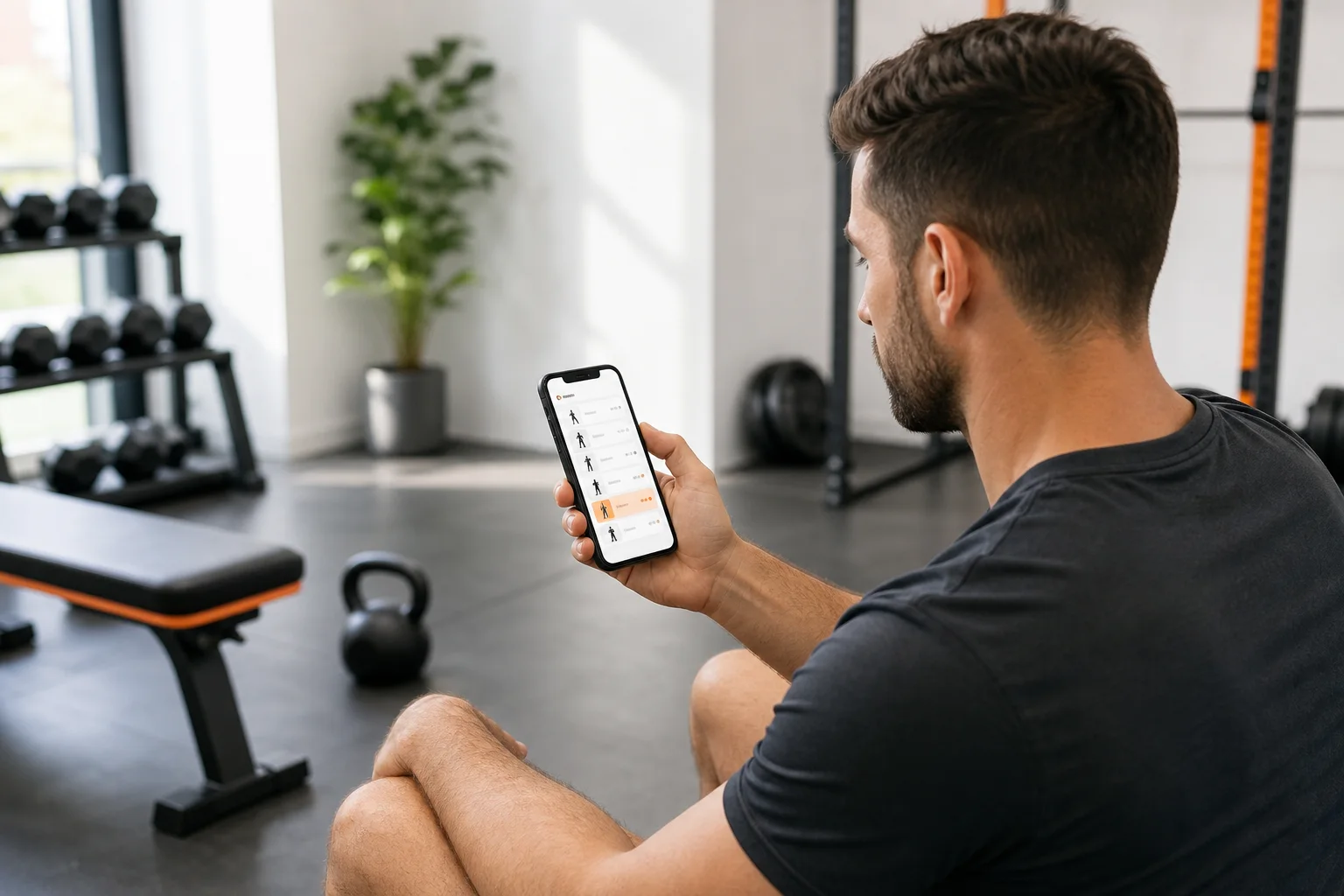
An adaptive workout generator should do more than shuffle exercises. It should help you choose a workable training frequency, match exercise difficulty to your experience, leave room for recovery and give you a sensible way to progress. The best plan is one you can repeat and adjust—not a demanding schedule that assumes every week goes perfectly.
Use the steps below to build a plan around the week you actually have. The examples are starting points for generally healthy adults; they are not individualized medical advice. If you have health concerns or need exercise modifications, get guidance from a qualified professional.
What should an adaptive workout generator adjust?
A useful plan responds to a few practical inputs:
- Experience: How familiar are you with the movements and equipment?
- Available days: How many sessions can you protect most weeks—not just on an ideal week?
- Time: How long can each session reasonably be?
- Equipment: What can you use at home or at your gym?
- Recovery and recent training: Have you been consistent, or are you returning after a break?
- Goal and preference: What kind of training do you enjoy enough to keep doing?
These inputs should shape the plan before it adds complexity. For example, a member with two reliable training days may benefit more from a repeatable full-body schedule than from a five-day split that is often interrupted.
Choose workout frequency you can sustain
For general adult fitness, U.S. activity guidance recommends muscle-strengthening activity on at least two days each week, working the major muscle groups. That is a helpful baseline, not a rule that every person must follow the same routine. Your training days should account for work, family, other activity and your current experience.
Two days per week: a practical starting point
Try two full-body sessions on nonconsecutive days. Each can include a knee-bend or squat pattern, a hip-hinge pattern, a push, a pull and a simple trunk exercise. Choose manageable variations and begin with a modest amount of work. A beginner strength plan can help you make a straightforward start; see this simple two-day beginner plan.
Three days per week: repeat or rotate
With three available days, you could repeat a full-body session with small variations, or alternate two session templates across the week. Keep the weekly workload reasonable: an extra day is an opportunity to spread training out, not a requirement to make every workout harder.
Four days per week: distribute the work
If you already train consistently and have time for four sessions, an upper- and lower-body rotation is one option. You might train upper body on Monday, lower body on Tuesday, rest Wednesday, then repeat those categories on Thursday and Saturday. Adjust the days to your schedule and avoid forcing hard sessions when you are not ready.
These examples are flexible templates, not a ranking of which frequency is best. A 2026 ACSM position stand emphasizes regular resistance training involving major muscle groups at least twice weekly for healthy adults, while training details can be individualized.
Match the plan to your current level
“Beginner,” “intermediate” and “advanced” are rough descriptions, not precise measurements. A more useful question is whether you can perform a movement with control, choose an appropriate load and recover before the next session.
- New or returning: Start with familiar, stable exercises and a manageable number of sets. Practice technique and leave room to learn before adding more work.
- Consistent but still developing: Keep the main movement patterns familiar. Add a small amount of volume or a slightly more challenging variation only when your current plan is going smoothly.
- Experienced: Use a clear goal and track the variables that matter to it. More training days or exercise variety are options, not automatic improvements.
Adapt exercises to your equipment and comfort. For example, if a particular machine is busy, choose a comparable movement you know how to perform rather than improvising a complicated substitute. If you train with limited equipment, a resistance-band routine can offer practical alternatives.
Use recovery to decide whether to hold, add or reduce work
Recovery is not a pass-or-fail test. Look at the pattern over several sessions: your energy, whether your technique stays controlled, whether you can complete the planned work and whether you feel ready to train again. Ordinary day-to-day variation is expected; one low-energy session does not mean your plan has failed.
Use a simple adjustment rule:
- Hold steady when the plan feels appropriately challenging and your performance is consistent.
- Progress gradually after you have completed the planned work with controlled technique across repeated sessions.
- Scale back for the day if fatigue, time pressure or poor readiness makes the planned session unrealistic. Reduce sets, use a familiar easier variation, or take a rest day.
Plan rest days between demanding sessions that train the same areas, especially when you are new to a routine. If you miss a workout, do not cram it into the next day by doubling the workload. Continue with the next planned session and let the schedule flex.
Progress with one clear change at a time
Progression means gradually increasing the training challenge when your current workload is manageable. That might mean using a little more resistance, doing an additional repetition, adding a set, or choosing a slightly more demanding variation. You do not need to change several things at once.
- Choose a movement and a repeatable version of it.
- Record the exercise, resistance, sets and repetitions you completed.
- Repeat the plan while keeping technique controlled.
- When the planned work feels manageable on more than one occasion, make one modest adjustment.
- Keep the change if it remains manageable; otherwise, return to the prior version.
For instance, if you are doing two sets of a movement for a target range of repetitions and can complete the upper end comfortably with good control, try a small resistance increase next time. If that makes the movement too difficult to perform well, reduce the load and build back up. Not every workout needs a personal record. A reliable training log makes patterns easier to spot; this guide to keeping a useful workout log covers what to record.
Example: adapt one plan across three different weeks
Imagine your usual plan has two full-body sessions, each with five exercises. Here is how you might adjust it without starting from scratch:
- Normal week: Complete both sessions and record your work. If the exercises feel manageable, keep the plan consistent.
- Busy week: Complete one shorter session with the main movements, then return to your usual schedule the following week. Do not try to make up every missed set.
- Low-readiness week: Keep the session but reduce the load or number of sets, or rest if you need to. Resume normal training when you are ready.
The point is not to have an algorithm make every decision. It is to use consistent rules so a change in schedule or readiness does not turn into an all-or-nothing choice.
Build or review a plan with GymPT
In GymPT, you can build a manual training program without AI credits and save records with a free account. Optional AI support is available for relevant actions; some actions may require credits, and eligible Premium features have their own requirements shown before use. If you work with a personal trainer, they can prepare a program proposal manually or with AI in the web workspace. You decide whether to review, save and use the proposal.
A trainer can make the plan more personal when you choose to share relevant programs, workout records or notes with them. Trainers review only the information clients permit them to access, and optional weekly AI summaries require the appropriate grants. For a practical introduction, read how a trainer prepares and shares a program proposal.
Quick checklist for choosing an adaptive plan
- Does the weekly schedule fit the number of days you can usually train?
- Are the exercises and equipment appropriate for your current experience?
- Can you adjust the session when time or readiness changes?
- Is there a simple record of exercises, sets and repetitions?
- Does the plan progress gradually instead of changing everything at once?
A well-designed adaptive workout generator helps you make those decisions clearly. Start with a sustainable schedule, track what you actually do and adjust one thing at a time. When your needs change, the plan should be flexible enough to change with you.