Gym Member Program Choice: How Gyms Can Support Better Training Decisions
A practical guide for gym owners and staff on supporting member-led training choices without replacing personal trainers or overreaching into private data.
In this article
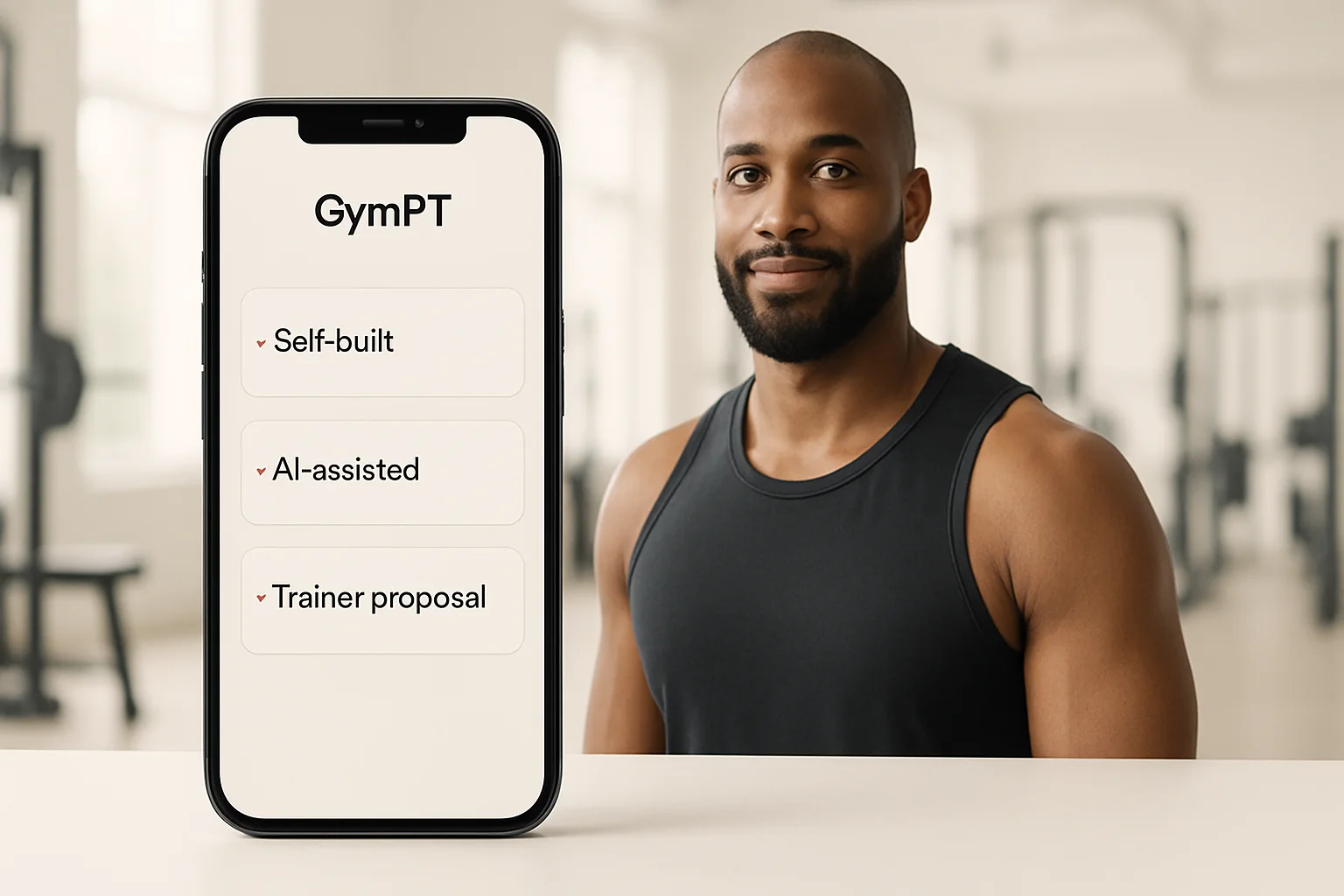
Good gym experiences do not all begin with the same training decision. One member may want to build a simple routine independently. Another may want help organizing exercises. A third may prefer a personal trainer to review their goals and prepare a structured proposal.
That is why gym member program choice matters. Gyms can create a better training environment by making several valid paths available, explaining the differences clearly and connecting members with the right level of support. The goal is not to push every member toward the same service. It is to help each person choose a practical next step while keeping professional judgment and privacy at the center.
Research on exercise adherence consistently points to the value of autonomy, competence, personalization, feedback and social support. In practice, that means members should understand their options, feel capable of acting on a plan and have access to human guidance when they need it. A gym workflow can support all three without assuming that technology or a paid subscription is required.
What gym member program choice should include
A useful choice framework gives members three clear routes:
- Self-built: The member creates a manual program based on their preferences, available equipment and schedule.
- AI-assisted: The member uses optional AI support to organize ideas, adjust a draft or explore possible training structures.
- Personal-trainer proposed: A real trainer reviews the information the member permits them to see and prepares a program proposal for the member to review.
These routes should not be presented as a ranking from “basic” to “best.” They serve different needs. A confident member may only need a place to record workouts. A beginner may benefit from a trainer’s explanation. Someone who enjoys experimenting may use AI as a planning aid but still want a professional review before saving a proposal.
For gym teams, the important principle is simple: choice should be informed, permission-based and easy to revisit. A member can start independently and later request trainer support. They can also review a proposal without being required to accept it.
Why autonomy can support exercise consistency
Exercise adherence is influenced by more than the technical quality of a program. People are more likely to continue when a routine fits their goals, preferences, confidence level and real-life constraints. Systematic reviews have found positive relationships between autonomy-supportive coaching, self-determined motivation and ongoing exercise participation.
This does not mean that every member should design everything alone. Autonomy is not the same as isolation. A member can retain decision-making control while receiving explanations, alternatives and feedback from a trainer or digital tool.
For gyms, autonomy-supportive service can look like:
- Asking what the member wants help with before recommending a service.
- Offering exercise or scheduling alternatives rather than presenting one rigid route.
- Explaining why a trainer proposal may differ from a self-built routine.
- Allowing the member to review and save a proposal only when it feels appropriate.
- Making it easy to change direction as the member gains confidence or encounters new constraints.
These practices help staff support members without turning the gym into a pressure-based sales funnel.
Route one: support a self-built workout program
A self-built program can be a strong option for members who already understand the basics, enjoy planning or want to begin with a manageable routine. It is also useful for members who are not ready to work with a personal trainer.
Gym staff can make this route more effective by helping members define a few practical boundaries:
- How many days per week can they realistically train?
- Which areas of the gym and equipment do they feel comfortable using?
- What type of session do they enjoy enough to repeat?
- How will they record sets, repetitions, loads, duration or other relevant details?
- When will they review whether the plan still fits?
A manual plan does not need to be complicated. A member might begin with two or three full-body sessions, a repeatable warm-up and a short list of exercises. The value comes from clarity and consistency, not from adding unnecessary complexity.
GymPT supports this member-led route by allowing members to build a manual program and save training records with a free account. Manual planning does not require AI credits. That distinction is useful for gym staff because it separates the member’s core training workflow from optional assistance.
For more ideas on practical programming, staff can point members toward this weekly workout routine for beginners or a focused 2 day dumbbell workout plan when appropriate.
Route two: use AI as planning support, not as the decision-maker
AI can help a member organize a draft, compare possible structures or turn preferences into a clearer starting point. However, it should be positioned as optional support rather than an independent trainer or a source of diagnosis.
A responsible gym workflow explains three points before a member uses AI:
- What the tool can help with: For example, organizing a routine or suggesting a structure based on the information provided.
- What still requires judgment: The member must decide whether the plan fits their experience, preferences, equipment and schedule. A qualified trainer may be appropriate when the member needs individualized professional guidance.
- What access or credits may apply: Some optional AI actions can require credits, and eligible Premium features may have separate requirements shown before use.
This transparent explanation prevents two common problems: making AI sound mandatory and making it sound more authoritative than it is. In GymPT, members can choose whether to request AI support. The core training workflow remains available without implying that a paid subscription is necessary.
For gym owners, the operational lesson is to present AI as one layer in a broader service model. It can reduce friction for planning, but it should not replace the gym’s relationships with real personal trainers or create the impression of unrestricted analysis across the member base.
Route three: let a personal trainer prepare a proposal
A trainer-proposed program is appropriate when a member wants more structure, accountability or expert interpretation. The proposal may be prepared manually or with optional AI support in the trainer’s web workspace, but the trainer remains responsible for reviewing the proposal before presenting it.
The member should remain part of the decision. A practical proposal workflow is:
- The member identifies a goal, preferred schedule and the type of help they want.
- The member permits the trainer to review selected programs, workout records or notes.
- The trainer reviews the permitted information and considers the member’s stated preferences.
- The trainer prepares a manual or AI-assisted proposal in the web workspace.
- The member reviews the proposal, asks questions and decides whether to save and use it.
- The member records training activity and can revisit the plan as circumstances change.
This sequence protects the difference between a proposal and an imposed program. It also reinforces a valuable professional boundary: PTs should see only the training data and notes that clients permit them to share. Optional weekly AI summaries likewise require the appropriate grants.
Gyms can reinforce this process with a short staff script: “Your trainer can prepare a proposal using the information you choose to share. You can review it before deciding whether to save and use it.” That sentence communicates support without overpromising access or outcomes.
For a deeper operational checklist, see the personal trainer program review checklist. Gyms that are improving cooperation between staff and independent trainers may also benefit from a personal trainer gym collaboration workflow.
How gyms can make the three routes easy to understand
Use a simple comparison at onboarding
New members should not need to understand every platform feature before making progress. A short onboarding explanation is enough:
- Build it yourself if you want direct control and a simple starting point.
- Use optional AI support if you want help organizing ideas.
- Request a trainer proposal if you want professional review and a more tailored structure.
Staff can then ask one follow-up question: “Which kind of support would make your first few weeks easier?” This keeps the conversation focused on the member’s needs.
Make permission visible
Members should understand that connecting with a trainer does not automatically give that trainer access to every record. GymPT uses permission-based sharing: PTs review only the programs, workout records and notes the client allows them to see.
Gyms should avoid describing this as a gym-wide data view. Branch access, staff roles and approved connections should be managed deliberately. A staff member’s access should reflect their role and the branch or connections they are authorized to manage.
Create a review point instead of a permanent commitment
A member’s first program is a starting point, not a lifetime decision. Encourage a review after the member has enough experience to answer practical questions:
- Was the schedule realistic?
- Did the member enjoy the sessions?
- Were the exercises and equipment accessible?
- Was the program too simple, too demanding or difficult to follow?
- Would the member prefer more independence or more trainer input?
This review can lead to a revised self-built plan, optional AI assistance or a trainer proposal. It also gives staff a constructive reason to reconnect without treating every conversation as a sales opportunity.
A practical gym workflow for member choice
Gym owners and managers can implement the model with five repeatable steps:
- Identify the member’s preferred level of support. Record whether they want independence, planning help or trainer guidance.
- Confirm the available connection. If a trainer is involved, ensure the member and trainer have an approved connection.
- Explain data sharing in plain language. Describe what the trainer can review and remind the member that permission controls access.
- Provide the appropriate next action. That may be creating a manual program, requesting optional AI help or asking a PT to prepare a proposal.
- Schedule a neutral review point. Ask whether the chosen route still fits, without assuming that the member must upgrade or change plans.
This workflow can be documented in a gym’s onboarding checklist and staff training materials. The gym member consent and privacy guide offers a useful companion framework for permission-based communication.
What success looks like for the gym
A successful choice model is not measured by how many members use one particular route. It is reflected in whether members can start training, understand their options, access appropriate human support and control what they share.
For staff, the strongest signs are practical:
- Members can explain the difference between self-built, AI-assisted and trainer-proposed programs.
- PTs receive the information clients intentionally share rather than an unrestricted data stream.
- Members review trainer proposals before saving and using them.
- AI is described as optional support that still requires human judgment.
- Branch and staff access is managed according to approved connections and roles.
When gyms support these principles, program choice becomes part of good member service. The gym provides structure without removing autonomy, technology without overstating its authority and trainer support without weakening the member’s final decision.