
5 Day Push Pull Legs Workout Plan: A Balanced Rotating Split
A five-day push pull legs split can fit busy training weeks—but a fixed calendar may shortchange legs. Use this rotating plan to balance sessions over time, manage recovery and progress without turning every workout into a max-effort test.
In this article
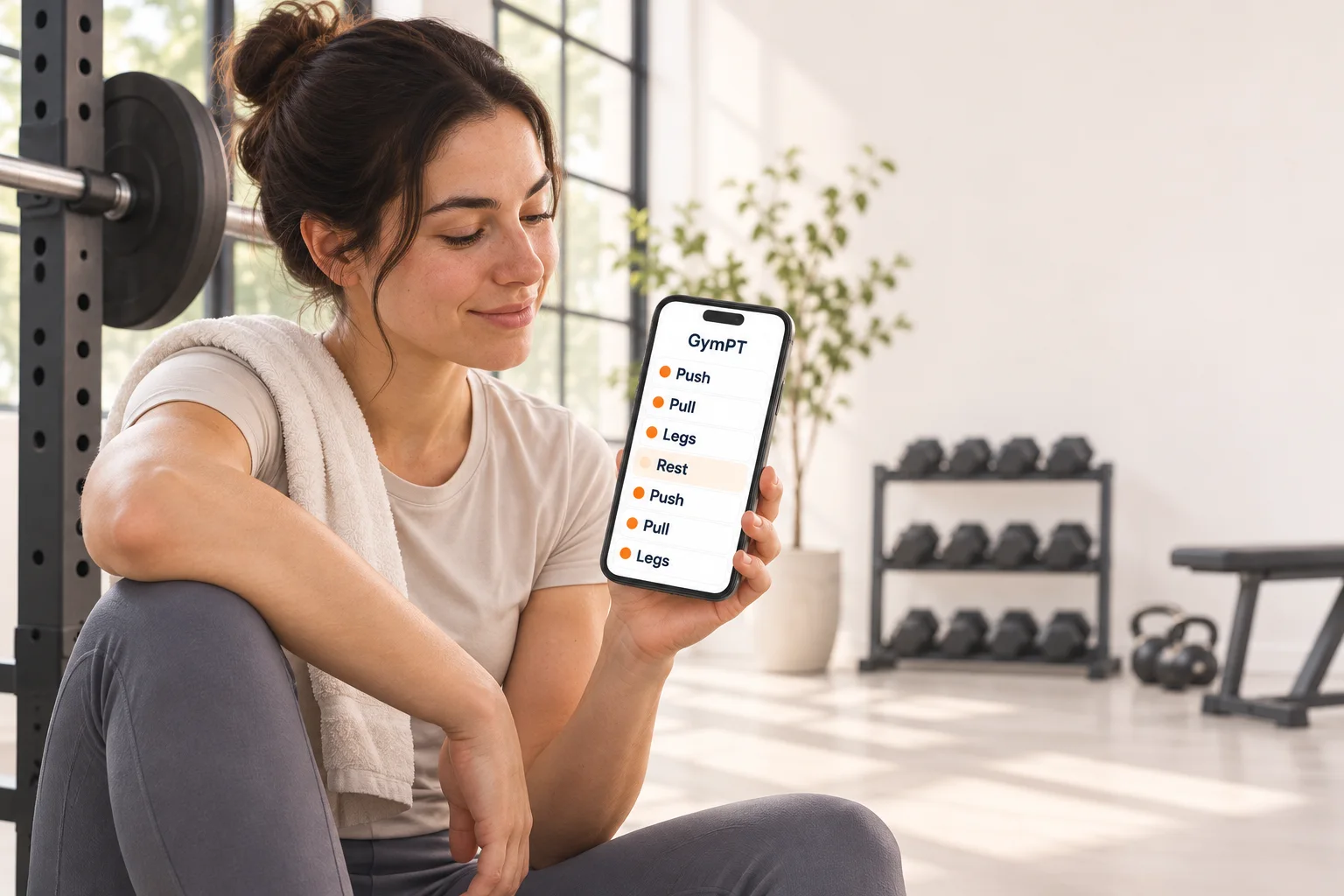
A 5 day push pull legs workout plan gives you five gym sessions each week: push exercises for the chest, shoulders and triceps; pull exercises for the back and biceps; and leg exercises for the lower body. The catch is that five sessions do not divide evenly across three workout types. If you repeat the same Monday-to-Sunday schedule every week, one group may consistently get less attention.
This guide solves that with a rotating PPL sequence. It is best suited to people who already train regularly, can manage five sessions most weeks and want a structure they can adjust. You will find a sample schedule, exercise options, recovery guidance and a straightforward way to progress. If five days feels like too much, a lower-frequency split can be a better starting point.
How to schedule a five-day PPL split
Rather than locking push, pull and legs to the same weekdays, keep the order moving across weeks. The sample below runs the three-session sequence continuously, with rest days placed after each block of three workouts.
- Week 1: Monday Push A, Tuesday Pull A, Wednesday Legs A, Thursday rest, Friday Push B, Saturday Pull B, Sunday rest.
- Week 2: Monday Legs B, Tuesday Push A, Wednesday Pull A, Thursday rest, Friday Legs A, Saturday Push B, Sunday rest.
- Week 3: Monday Pull B, Tuesday Legs B, Wednesday Push A, Thursday rest, Friday Pull A, Saturday Legs A, Sunday rest.
Then continue the sequence. Across the three-week rotation, each workout type appears five times, instead of always giving the same category the short end of the weekly calendar. The exact weekdays are flexible: move a session or take an extra rest day when life or recovery calls for it, then resume with the next workout in the sequence.
This is a planning template, not a rule that every lifter must train five days. The goal is to spread useful work across the week and keep the schedule repeatable. For a simpler overview of split options, see how to choose a beginner workout split.
Sample push pull legs workout plan
Choose one variation for each exercise slot and keep it consistent long enough to track. Machines, dumbbells, barbells and bodyweight movements can all work; pick options you can perform comfortably with the equipment available. The sets below are working sets, not warm-up sets.
Push A and Push B
- Push A: bench press or machine chest press, 2–3 sets of 6–10 reps; seated shoulder press, 2–3 sets of 8–12; incline dumbbell press, 2 sets of 8–12; cable or dumbbell lateral raise, 2 sets of 12–20; triceps pressdown, 2 sets of 10–15.
- Push B: incline chest press, 2–3 sets of 6–10; dumbbell shoulder press, 2 sets of 8–12; chest fly, 2 sets of 10–15; lateral raise, 2 sets of 12–20; overhead cable triceps extension, 2 sets of 10–15.
Pull A and Pull B
- Pull A: lat pulldown or assisted pull-up, 2–3 sets of 8–12; chest-supported row, 2–3 sets of 8–12; cable row, 2 sets of 10–15; rear-delt raise, 2 sets of 12–20; dumbbell curl, 2 sets of 10–15.
- Pull B: a different-grip pulldown or pull-up, 2–3 sets of 6–10; one-arm dumbbell row, 2–3 sets of 8–12 per side; reverse fly, 2 sets of 12–20; face pull, 2 sets of 12–20; hammer curl, 2 sets of 10–15.
Legs A and Legs B
- Legs A: squat or leg press, 2–3 sets of 6–10; Romanian deadlift, 2–3 sets of 8–12; leg curl, 2 sets of 10–15; calf raise, 2 sets of 10–15; plank, 2–3 controlled sets.
- Legs B: split squat or hack squat, 2–3 sets of 8–12; hip thrust, 2–3 sets of 8–12; leg extension, 2 sets of 10–15; leg curl, 2 sets of 10–15; calf raise, 2 sets of 10–15.
These are menus, not mandatory exercise lists. If you are new to lifting, begin with two working sets per movement, use manageable loads and prioritize learning the movements. A personal trainer can help you choose appropriate variations; this three-day workout plan is another option if you want fewer weekly sessions.
Adjust the plan to your training level
Newer to strength training
Five lifting days can be a lot to organize when you are still learning exercise technique and how much work you recover from. Start with three or four weekly sessions, or use fewer exercises and two sets per movement before adding training days. A good session is one you can repeat with steady form—not one that leaves you too tired to train consistently.
If you like the push-pull-legs structure, you can follow the sequence on three nonconsecutive days and simply continue where you left off the next week. For example, train Push, Pull and Legs in week one; then start with Push again in week two. You do not have to squeeze all three workout types into every calendar week.
Regularly training and ready for five days
Use the full rotating schedule if five sessions fit your routine and your performance remains steady. Start at the lower end of the set ranges. Add work only when you have a clear reason—such as a muscle group that is not receiving enough useful training—and you are recovering well between sessions. More exercises are not automatically better.
Recovery: make the schedule fit you
Rest days are part of the program. The rotating schedule places a break after three sessions, but you can move rest days to suit your week. Try to avoid stacking hard sessions for the same muscles without enough time between them, and consider whether demanding work, sports or other exercise is adding to your overall workload.
Use a simple check after each workout: Did you complete the planned reps with controlled technique? Are you generally ready for the next session? Is performance holding steady or improving over time? If several answers are no, reduce a set or two, add a rest day or temporarily use lighter loads. A workout plan should respond to your actual training record, not just the calendar.
Training to failure on every set is not required. Most working sets can finish with roughly two or three good repetitions still possible. Stop sooner if your technique is breaking down. This keeps the session challenging without making every set an all-out effort.
How to progress without guessing
- Pick a rep range. Use the ranges listed above and log the load and completed reps for each exercise.
- Build reps with the same load. For example, if your chest press target is 6–10 reps, gradually add clean reps across sessions without changing the weight.
- Increase load when ready. Once you can reach the top of the range on all working sets with consistent form, make a small increase and build reps again.
- Review the trend. Compare several sessions, not just one unusually good or difficult day. If progress stalls and recovery is poor, adjust the workload before adding more.
Two to three working sets per exercise is a practical starting point, not a universal prescription. Research reviews find that multiple sets can be useful, while the right amount depends on the person and plan. You do not need to chase a fixed number of sets at the expense of good technique, recovery or consistency.
GymPT lets members build a manual program and save workout records with a free account; manual planning does not require AI credits. You can also request optional AI assistance or review a program proposal prepared by a personal trainer, then decide whether to save and use it. Any optional AI action that requires credits or an eligible Premium feature shows its requirements before use. If you share records or notes with a trainer, they can review only what you permit them to access. Learn more about using an AI workout assistant to plan and check details, or compare this routine with a two-day push pull legs plan.
Is a five-day PPL plan right for you?
Choose this split if five weekly gym visits suit your life, you enjoy focused workouts and you are willing to rotate the sequence so training stays balanced over time. Choose fewer days if five sessions make recovery, attendance or workout quality harder to maintain. Whichever schedule you use, keep a record, progress gradually and treat rest as part of the plan—not a missed workout.