
Workout Progress Tracking: Build a Log That Helps You Improve
A useful workout log is more than a list of weights. Track completed sessions, key exercise details and brief notes, then use the trends to make calm, informed training decisions.
In this article
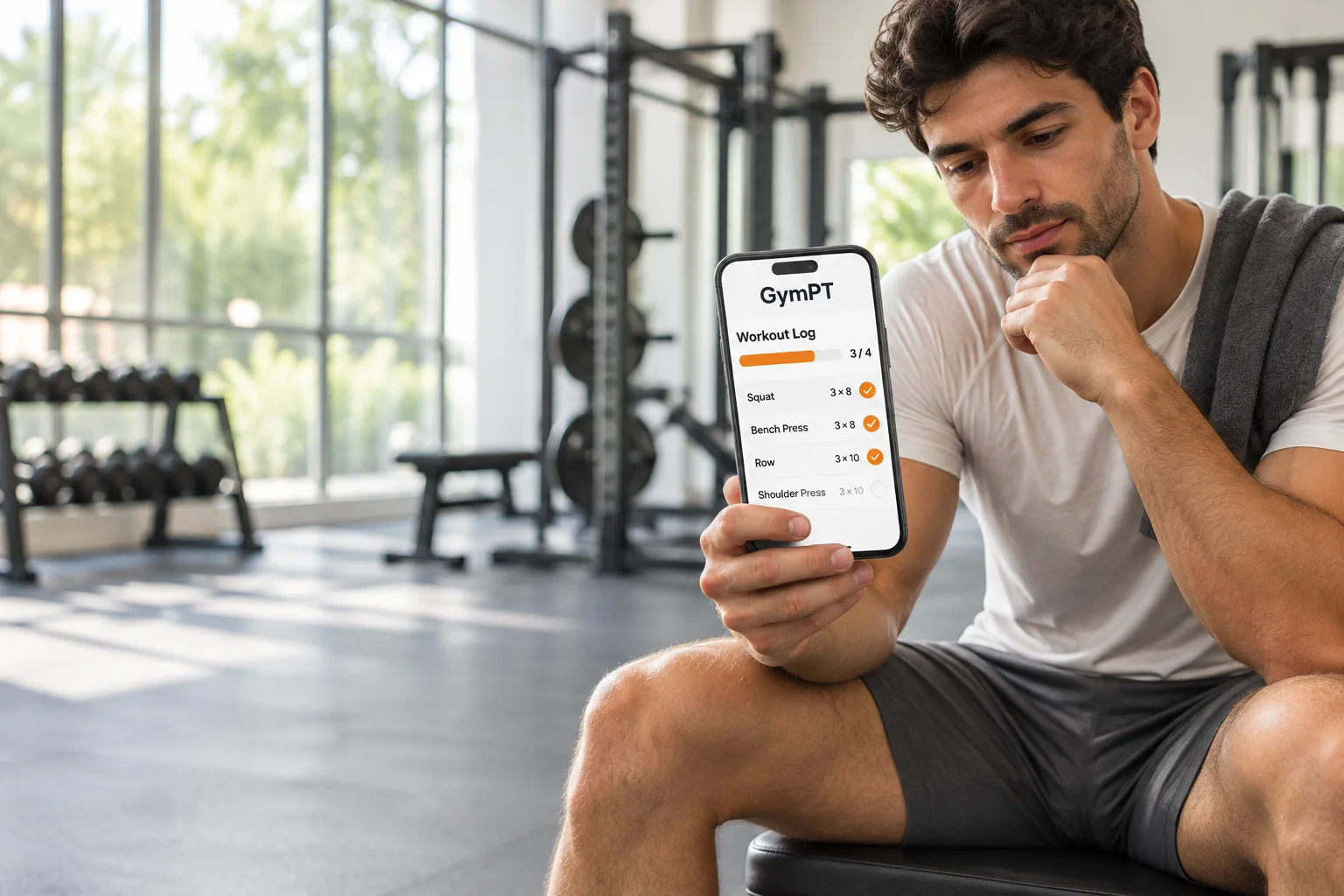
Good workout progress tracking answers practical questions: Did you complete the sessions you planned? Are your lifts, repetitions or movement quality changing over time? Is your current program still workable? A simple training log can help you spot patterns without turning every workout into a test.
The aim is not to collect the most data. It is to record enough to compare similar sessions, notice useful trends and decide whether to keep following your plan or discuss a change with your trainer. One unusually strong or difficult workout is just one data point—not a verdict on your progress.
What to record in a workout log
Start with details that help you repeat or compare a session. For each workout, record:
- Date and session: For example, “Tuesday — full body” or the name of the workout in your program.
- Exercises and work completed: Note sets, repetitions and the load used for resistance exercises. For other activities, record a relevant measure such as duration, distance or rounds.
- Changes from the plan: Mark exercises you skipped, substituted or adjusted, and briefly note why if it will help you understand the record later.
- A short effort or context note: If useful, record whether the session felt easier or harder than usual, or note a practical factor such as limited time. Keep this brief and consistent.
For instance, a record might read: “Goblet squat — 3 sets of 8 at 20 kg; completed all sets; felt controlled.” That gives you more to compare than “legs done,” while staying quick to enter. You do not need to track every possible variable. Choose details you will actually use.
How to read progress beyond the heaviest weight
Strength training progress can show up in several ways. You might complete more repetitions with the same load, use a slightly heavier load for comparable work, perform a planned session more consistently, or find that a movement feels more controlled. Which indicators matter most depends on your goal and program.
Compare like with like: the same exercise, a similar setup and the same point in your program. A change in equipment, exercise variation, range of motion or technique can make two numbers less comparable. Record the change rather than treating the new number as a direct personal best.
Look across several sessions, not just one. A single workout may differ because of sleep, schedule, equipment availability or ordinary day-to-day variation. A repeated pattern is more useful for deciding what to do next. Current resistance-training guidance emphasizes progressive training, but it does not mean that every workout needs a bigger number or that one progression formula suits everyone.
A simple example
Suppose your program calls for 3 sets of 8–10 repetitions on an exercise. You record the load and repetitions each time. If, over repeated sessions, you complete the top of the prescribed range with the intended technique and effort, that is useful information to review against your program’s progression instructions. Follow those instructions rather than adding weight automatically. If your plan does not explain how to progress, ask your trainer or use a qualified coach’s guidance.
Use consistency as a progress measure
A plan only helps if it fits your real week. A log lets you compare planned sessions with completed sessions and notice practical obstacles: perhaps a workout regularly runs too long, a particular day is difficult to protect, or you often need an equipment alternative. That is actionable feedback—not a reason to label yourself as failing.
Choose a review period that suits your schedule. Once a week, ask whether you completed the sessions you intended and whether your records are complete enough to guide the next week. Every few weeks, look for broader patterns in exercise performance and plan fit. Avoid changing your whole routine in response to one missed workout or one low-energy session.
If you are still choosing a schedule, compare it with a realistic template such as this five-day gym workout plan or this four-day upper-lower plan. Treat any template as a starting point to adapt to your experience, availability and recovery—not a requirement to hit a particular number of days.
Turn the record into a useful decision
At review time, keep the process straightforward:
- Check what you planned and completed. Note missed or modified sessions without trying to make up every gap at once.
- Compare repeated exercises. Look at sets, repetitions, loads and any relevant effort notes across comparable sessions.
- Identify one pattern. For example, a session may be consistently too long, or a planned exercise may often need a substitute.
- Choose a modest next step. Keep following the program, make a practical scheduling adjustment, or ask your trainer to review the pattern.
When working with a personal trainer, share the specific program, workout records or notes you want them to review. In GymPT, a trainer can review only the records and programs you permit them to see. If a trainer sends you a program proposal, review it and decide whether to save and use it. Your log supports that conversation; it does not make the decision for you.
If you are starting from scratch, this beginner gym-plan guide can help you think through a manageable starting structure. For choosing digital tools to organize training, see what to look for in a personalized gym app.
Keep tracking simple enough to sustain
A useful log should reduce guesswork, not add pressure. You can begin with a notes app or paper, then use a training app if saving and reviewing your records in one place would help. In GymPT, members can build a manual program without AI credits, record workouts and keep records with a free account. Optional AI actions may require credits, and eligible Premium features have their own requirements shown before use.
- Record the key work you actually completed, not an idealized version of the session.
- Use the same units and exercise names where possible so comparisons stay clear.
- Keep notes brief and focused on useful context.
- Review trends periodically instead of judging every workout in isolation.
- Ask a real trainer for help when the record raises questions about your plan.
In short, effective workout progress tracking combines a clear training log with a calm review habit. Track consistency and relevant exercise details, compare similar sessions over time, and let your program and professional guidance shape changes. The best log is the one that helps you make the next sensible decision—and that you can keep using.