30 minute dumbbell workout plan
30 Minute Dumbbell Workout Plan for a Strong, Efficient Session
A well-designed 30 minute dumbbell workout plan does not need dozens of exercises. Use a balanced movement structure, realistic loading and a simple progression system to train efficiently with the equipment you have.
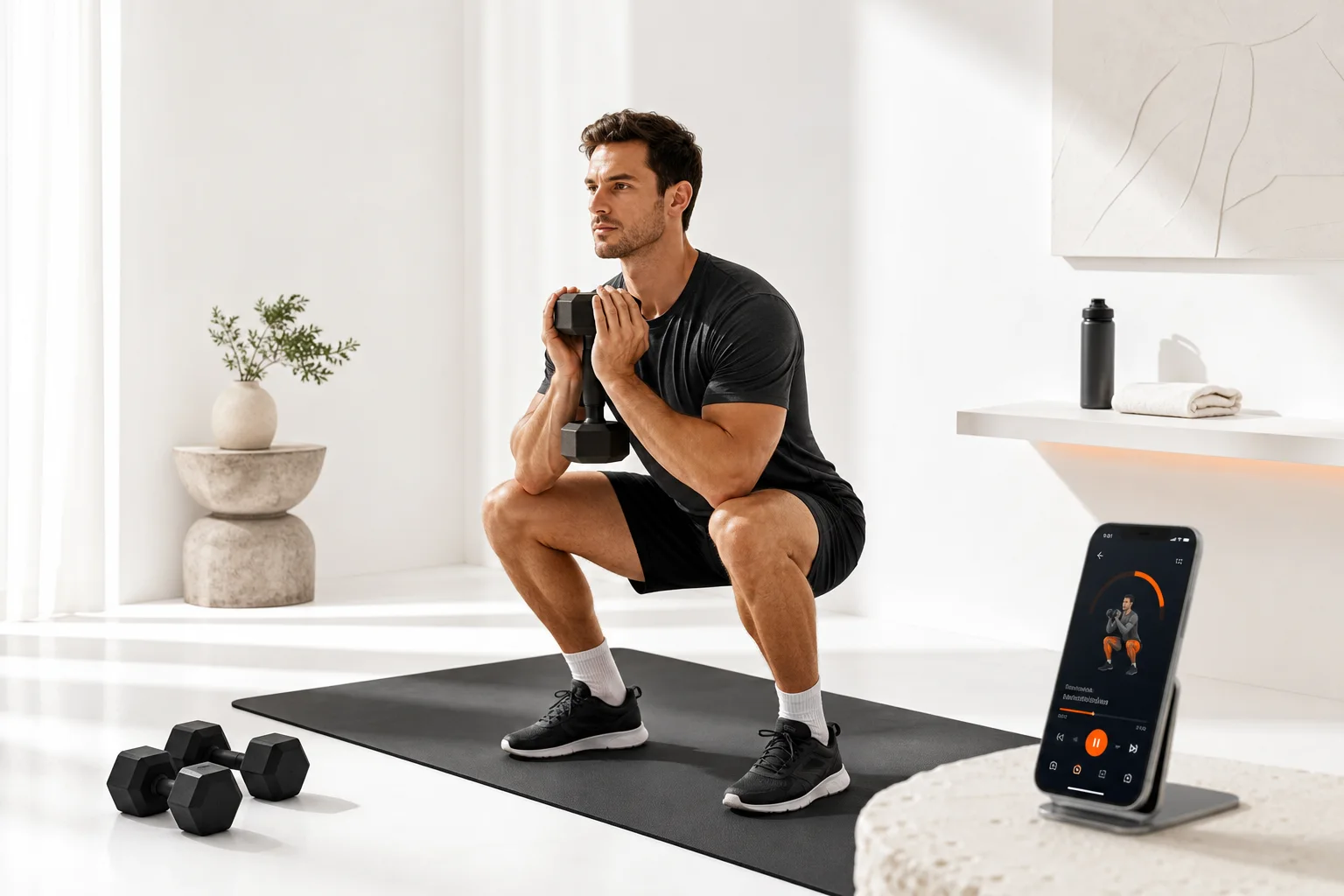
A 30 minute dumbbell workout plan can be enough for a productive full-body strength session when every exercise has a clear purpose. The goal is not to fit as many movements as possible into half an hour. It is to train major movement patterns, choose a load you can control and record enough information to improve next time.
This plan is designed for members who have a pair of dumbbells, adjustable dumbbells or access to a small selection of weights. You can complete it at home or in a gym, and you can adapt the exercise choices around your available equipment. If you are new to structured resistance training, start conservatively and focus on smooth repetitions rather than rushing through the timer.
How to structure a 30 minute dumbbell workout
Use the session in four simple parts:
- Warm-up: 4 minutes of easy movement and lighter practice repetitions.
- Main circuit: 20 minutes covering your legs, pushing muscles, pulling muscles and hips.
- Optional finisher: 3 minutes of controlled core or conditioning work.
- Record and reset: 3 minutes to note loads, repetitions and how the session felt.
For the main circuit, complete 2 to 3 rounds. Perform 8 to 12 controlled repetitions of each strength exercise, or 30 to 40 seconds for a simpler timed option. Rest about 30 to 60 seconds between movements. If your technique begins to break down, take longer rest rather than trying to protect the clock.
This approach covers the major muscle groups without requiring a complicated program. Current physical activity guidance recommends muscle-strengthening activity on at least two days each week, while the best routine is one you can perform consistently and progress gradually.
The 30 minute dumbbell workout plan
1. Goblet squat
Repetitions: 8 to 12
Hold one dumbbell close to your chest. Stand with your feet around shoulder-width apart, brace your midsection and lower under control. Keep your feet planted and drive through the floor to stand.
Choose a goblet squat when you have one heavier dumbbell. If you only have light dumbbells, hold one in each hand by your sides or slow the lowering phase to make the set more challenging.
2. Dumbbell Romanian deadlift
Repetitions: 8 to 12
Hold the dumbbells in front of your thighs. Push your hips back while keeping the weights close to your legs. Lower until you feel tension through the back of your thighs, then squeeze your glutes and return to standing.
The movement should come primarily from the hips, not from rounding your back. Use a lighter load if you cannot keep the dumbbells close or maintain a stable position.
3. Dumbbell floor press or bench press
Repetitions: 8 to 12
If you have a stable bench, perform a dumbbell bench press. If not, use a floor press. Lie on your back with a dumbbell in each hand, lower with control and press the weights upward without bouncing or forcing your shoulders into an uncomfortable position.
The floor press naturally limits the range of motion and can be a practical alternative for home workouts. A neutral grip, with your palms facing each other, may feel more comfortable for some people.
4. One-arm dumbbell row
Repetitions: 8 to 12 per side
Support one hand on a bench, sturdy chair or your thigh. With the other hand, pull the dumbbell toward your ribs while keeping your torso steady. Lower slowly and repeat before switching sides.
If you do not have a stable support, perform a bent-over row with both dumbbells. Keep your spine neutral, brace your trunk and avoid using momentum to lift the weights.
5. Reverse lunge
Repetitions: 6 to 10 per side
Hold the dumbbells at your sides and step one foot backward. Lower under control, keep the front foot stable and push through the floor to return to standing. Alternate sides or complete all repetitions on one leg before switching.
Reverse lunges are often easier to control than forward lunges because the stepping leg moves backward. If balance is a challenge, use lighter dumbbells or hold onto a stable support.
6. Standing dumbbell shoulder press
Repetitions: 8 to 12
Start with the dumbbells near shoulder height. Brace your midsection and press the weights overhead without leaning back. Lower them slowly to the starting position.
If overhead pressing does not feel comfortable, substitute a lighter load, use a seated position with back support or replace the movement with another pressing variation recommended for your training needs.
How to fit the exercises into 30 minutes
After a short warm-up, arrange the exercises as a circuit:
- Goblet squat
- Dumbbell Romanian deadlift
- Floor press or bench press
- One-arm dumbbell row
- Reverse lunge
- Standing shoulder press
Complete one set of each exercise, then repeat the circuit. Start with two rounds if you are new to resistance training or if the prescribed repetitions take longer than expected. More experienced members can complete three rounds while preserving good technique.
To keep transitions efficient, place your dumbbells, water and any support equipment within reach before you begin. Using the same equipment throughout the session reduces unnecessary setup time and lets you spend more of the workout performing quality repetitions.
How to choose the right dumbbell weight
The correct weight depends on the exercise, your current strength and the goal of the session. A useful starting point is a load that allows you to complete the lower end of the repetition range with controlled technique, while the final few repetitions feel challenging.
- If you cannot reach 8 good repetitions, reduce the weight.
- If you can easily exceed 12 repetitions with plenty of energy left, increase the weight slightly or use a slower tempo.
- If your posture changes, your range of motion becomes inconsistent or you need momentum, stop the set and adjust.
- Use different weights for different movements when possible. Your squat and deadlift may require more load than your shoulder press.
Do not assume that heavier is always better. The most useful load is the one that lets you train the intended movement repeatedly and safely. For additional guidance on matching a routine to the equipment you actually have, read GymPT's gym equipment profile for workout planning.
How to progress the plan over time
Repeat this workout once or twice per week, leaving enough recovery between sessions. Progress one variable at a time rather than changing everything at once.
- Repetitions: Move from 8 toward 12 repetitions with the same load.
- Load: Increase the dumbbell weight slightly after you can complete all sets with stable technique.
- Sets: Add a third circuit when two rounds no longer feel sufficiently challenging.
- Tempo: Slow the lowering phase for two or three seconds when heavier dumbbells are unavailable.
- Rest: Reduce rest modestly only if your technique and performance remain consistent.
Record the weight, repetitions, sets and a brief note about difficulty after each workout. This gives you a clearer basis for your next session than relying on memory. A simple weekly routine can make that process easier; see the weekly workout routine for beginners guide if you are building a schedule from scratch.
How to adapt the workout to your equipment
You do not need a complete dumbbell rack to use this plan. Adapt the exercises according to what is available:
- One dumbbell: Use goblet squats, suitcase deadlifts, one-arm rows and alternating presses.
- Light dumbbells: Add controlled pauses, slower lowering phases or extra repetitions within a sensible range.
- Heavy dumbbells: Use fewer repetitions, longer rest periods and a stable setup.
- No bench: Use floor presses, supported rows from a sturdy position and standing movements.
- Limited space: Choose stationary squats, deadlifts, rows and reverse lunges instead of movements that require traveling.
GymPT can help you save a manual program, record your workout and keep your equipment choices visible for future adjustments. You can also request optional AI assistance, or review a program proposal prepared by a real personal trainer. A trainer's recommendations should still be reviewed against your goals, available equipment and training experience before you save and use the proposal.
When to ask a personal trainer for help
A short dumbbell workout is useful, but a trainer can make the plan more specific. Consider asking for help when you are unsure how to perform a movement, need substitutions for your equipment, are returning after a long break or want a progression beyond the same full-body session.
With GymPT, a personal trainer only reviews the programs, workout records and notes you choose to share. You remain in control of what is visible, and you can review a proposed program before deciding whether to save and follow it. Learn more about the personal trainer workout program proposal workflow.
Make the 30 minutes count
The best 30 minute dumbbell workout plan is not the most exhausting one. It is the plan that fits your equipment, trains the movement patterns you need and gives you a clear next step. Start with two controlled rounds, record what you complete and progress gradually. If you are new to training, the weekly workout routine for beginners guide can help you place this session into a repeatable week.
Stop if you experience sharp pain, unusual symptoms or a loss of control, and seek qualified professional guidance when the exercise is not appropriate for your situation. GymPT provides fitness planning and record-keeping support, not medical diagnosis or treatment.