machine chest workout
Machine Chest Workout: A Coach’s Guide to Better Pressing, Better Control, Better Growth
A machine chest workout can be one of the easiest ways to train your chest with control, stability, and consistent tension. Learn how to set up, press well, and program it for growth.
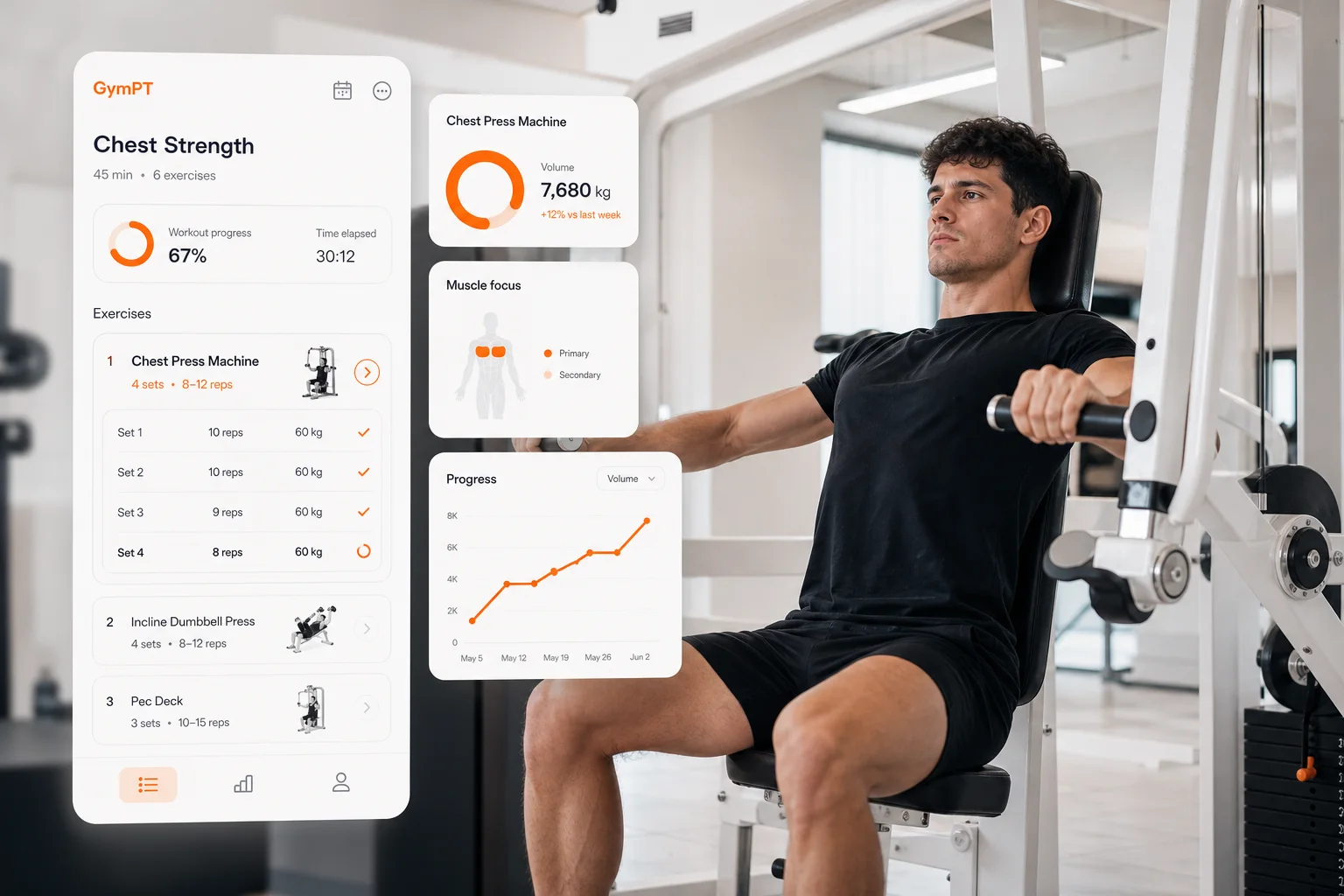
Machine Chest Workout: Why It Works So Well
A machine chest workout is a smart choice when you want to train your chest with less setup, more stability, and easier progression. Machines reduce balance demands, so you can focus on pressing hard with clean form and steady tension. That makes them especially useful for beginners, busy gym sessions, and anyone who wants a chest day that feels controlled instead of chaotic.
For muscle growth, the big idea is simple: use enough weekly volume, train close to failure with good technique, and repeat the work consistently. Current resistance-training guidance supports moderate loads, multiple sets, and progressive overload as reliable ways to build muscle. In practice, that means your chest machine work should be planned, not random.
What a Good Machine Chest Workout Should Do
A strong chest session should do three things:
- Load the chest through a comfortable pressing path.
- Let you repeat reps with stable technique.
- Give you a clear way to add reps or weight over time.
The best machine chest exercises usually include a horizontal press, an incline press, and sometimes a chest fly pattern. Together, they cover the chest from different angles while keeping the movement easy to track.
How to Set Up the Chest Press Machine
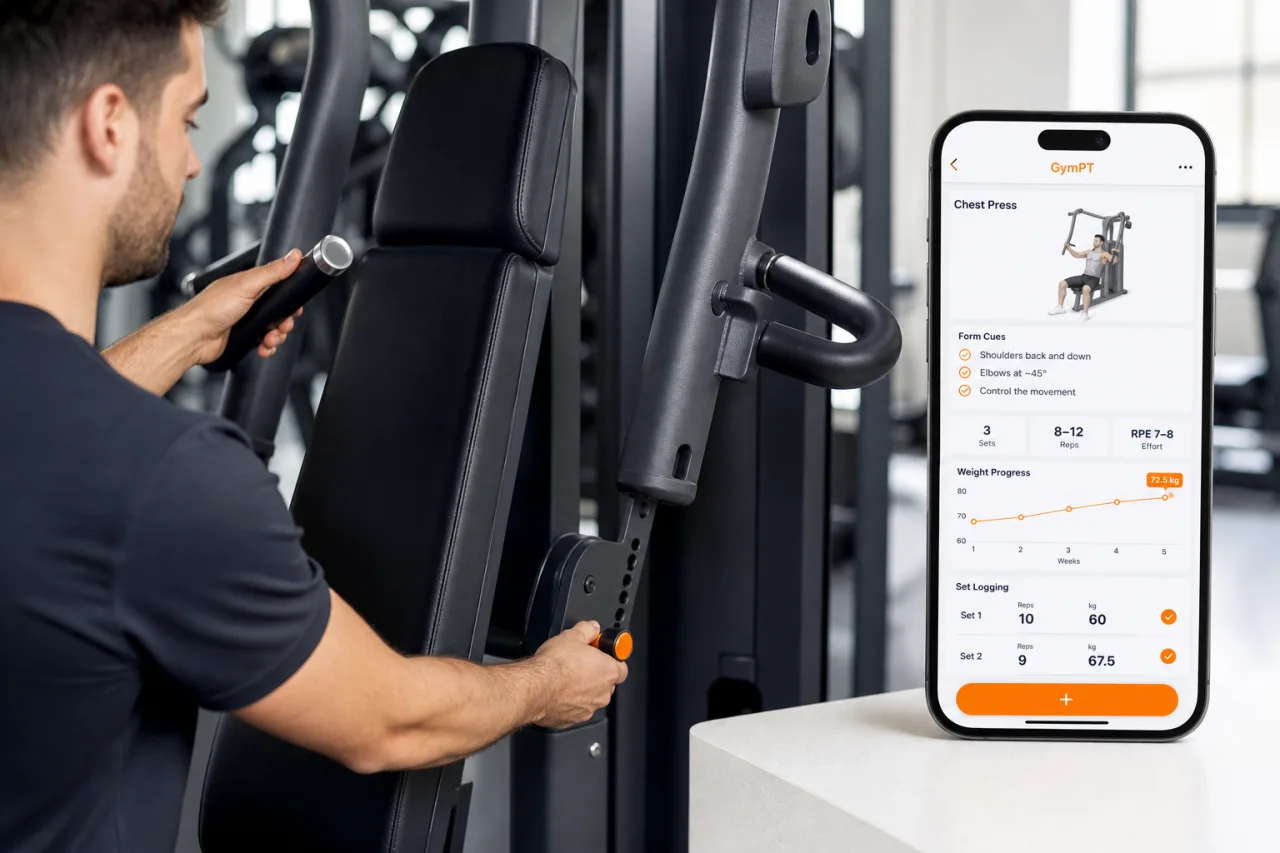
Before you press, set the machine up so the handles line up with the middle of your chest. That usually gives you a strong pressing path without forcing your shoulders too far forward or too high.
Quick setup checklist
- Seat height: handles should start around mid-chest level.
- Back position: keep your upper back supported and your chest proud.
- Feet: plant them firmly for stability.
- Grip: hold the handles firmly, but do not crush them.
- Shoulders: keep them down and back without over-arching your lower back.
As you press, think about driving the handles away while keeping your ribs controlled. The goal is a smooth press, not a shrugging contest.
Machine Chest Workout Form Cues That Matter
Good form is what turns a machine chest workout into productive chest training instead of just moving weight.
Use these cues
- Lower with control. Let the handles come back slowly instead of bouncing out of the bottom.
- Keep your elbows in a comfortable path. A slight angle from your torso is usually easier on the shoulders than flaring hard.
- Press through the middle of the chest. Do not let the handles drift too low or too high.
- Stop before your shoulders roll forward. If the front of the shoulder takes over, shorten the range slightly.
- Exhale as you press. A steady breath helps you stay braced.
If the machine feels awkward, do not force a perfect textbook shape. Adjust the seat, grip, and range until the movement feels stable and repeatable.
Best Machine Chest Exercises for a Balanced Session
Not every chest machine does the same job. A balanced session usually combines one main press with one secondary movement.
1. Seated chest press
This is the foundation of most machine chest workouts. It lets you load the chest safely and progress week to week with clear numbers.
2. Incline chest press machine
This shifts more work toward the upper chest and front delts. It is a useful second press if your gym has one.
3. Pec deck or machine fly
Fly machines are not a replacement for pressing, but they are excellent for adding chest isolation and a strong squeeze at the shortened position.
4. Plate-loaded chest press
These machines often feel more natural for lifters who want a heavier pressing feel while still keeping the movement guided.
How Much Volume You Need for Chest Growth
For most lifters, chest growth responds well to a moderate amount of weekly work. A practical target is 8 to 16 hard sets per week for the chest, split across two or more sessions if possible. Beginners often grow well on the lower end, while more experienced lifters may need more total work to keep progressing.
A simple rule: if your chest is recovering well and your reps are improving, your volume is probably in the right zone. If performance drops session after session, you may be doing too much.
Good rep ranges
- 6 to 10 reps for heavier pressing work.
- 8 to 12 reps for most machine chest press sets.
- 12 to 15 reps for fly variations or lighter finishers.
Train most sets with about 1 to 3 reps in reserve. That usually gives you enough effort to grow without turning every set into a grind.
A Beginner-Friendly Machine Chest Workout
If you are new to chest training, keep the plan simple. You do not need five variations to make progress.
- Chest press machine — 3 sets of 8 to 10 reps
- Incline chest press machine — 2 sets of 8 to 12 reps
- Pec deck fly — 2 sets of 12 to 15 reps
Rest for 60 to 90 seconds between sets. If your form starts to break down, take a little longer.
This is enough to build confidence, learn the movement, and create a clear progression path.
How to Progress Without Guessing
Progressive overload does not have to be complicated. On machines, the easiest method is double progression:
- Pick a rep range, such as 8 to 12.
- Use the same weight until you can hit the top of the range for all sets.
- Increase the load slightly and repeat.
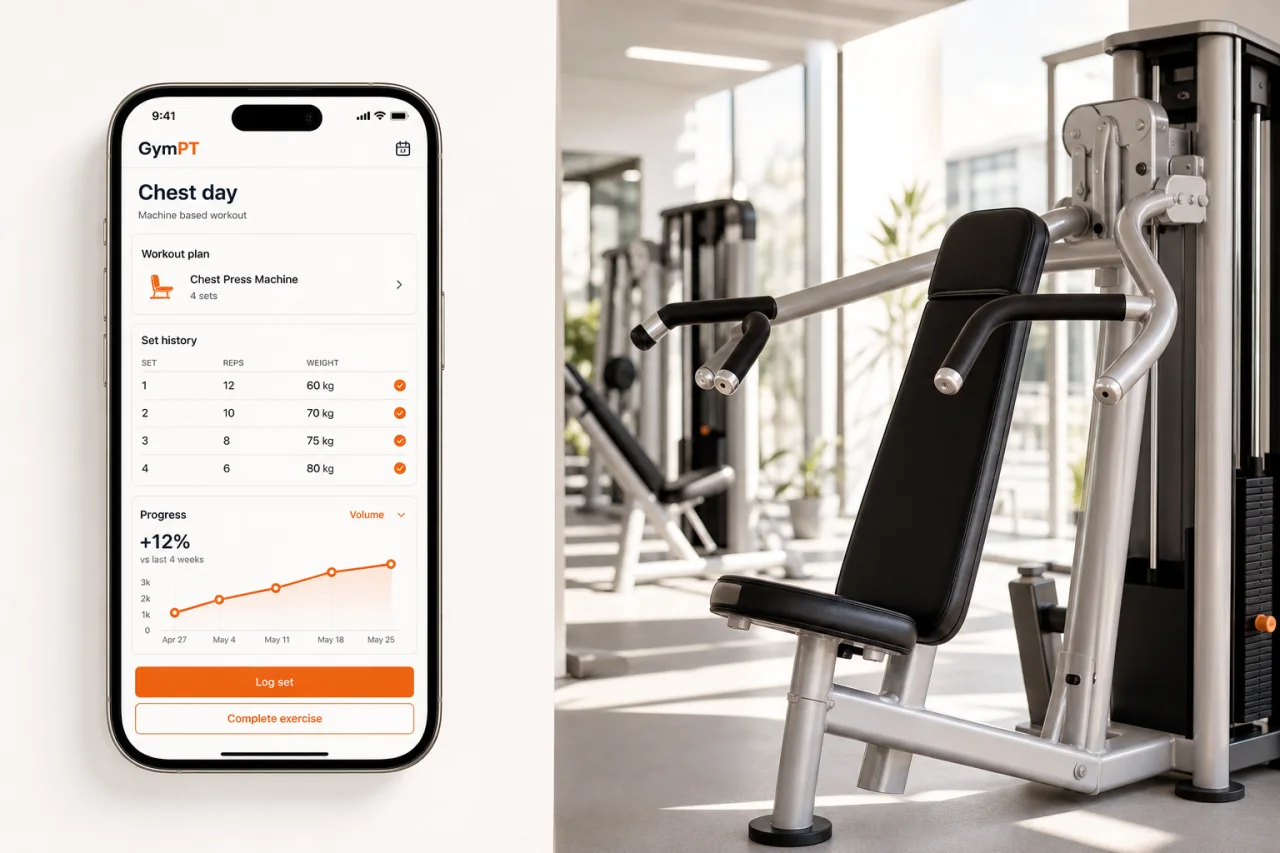
That approach works well because machine exercises are stable and easy to track. It also fits perfectly with workout logging inside GymPT, where you can see your reps, loads, and trends over time.
Common Machine Chest Workout Mistakes
Even on machines, small mistakes can make your chest work less effective.
- Seat too high or too low. This changes the pressing path and can shift stress away from the chest.
- Cutting the range too short. If you never control the lowering phase, you lose useful tension.
- Turning every set into a max effort grind. That can hurt recovery and make technique sloppy.
- Letting the shoulders take over. If your shoulders dominate, reduce load and clean up the path.
- Doing only one press angle forever. A flat press is great, but incline and fly work can round out the session.
If you want a more detailed breakdown of pressing errors, it helps to review your setup and rep quality after each session.
When a Machine Chest Workout Is the Better Choice
Machines are not “easier” in a bad way. They are often the better tool when your goal is to train hard with less technical noise.
Choose machines when you want:
- More stability and less setup time.
- A safer way to push close to failure.
- Consistent tension from session to session.
- A beginner-friendly way to learn pressing mechanics.
- Extra chest volume without exhausting your whole body.
That is why machine chest work fits well in a push day, an upper-body split, or a home-to-gym transition plan where you want predictable progress.
Sample 30-Minute Machine Chest Workout
If you want a simple session you can actually repeat, try this:
- Chest press machine — 4 sets of 6 to 10 reps
- Incline chest press machine — 3 sets of 8 to 12 reps
- Pec deck fly — 3 sets of 12 to 15 reps
Keep your first press heavy enough to challenge you, then use the second press and fly to add quality volume. If you are short on time, drop the fly and keep the two presses.
How GymPT Helps You Train Chest Smarter
GymPT can turn a machine chest workout into a real plan instead of a guess. Use it to build a chest day around your equipment, log your sets, and track whether your pressing strength is actually moving up. If you are unsure how much volume to use, the AI coach can help you adjust based on your recovery, experience level, and available machines.
That matters because the best workout is not the one that looks hardest. It is the one you can repeat, recover from, and improve.
Final Takeaway
A machine chest workout is one of the most practical ways to build your chest with control. Set the machine up well, press with clean form, use enough weekly volume, and progress gradually. If you do that consistently, machines can be a very effective part of your chest training.
Start simple, track your numbers, and let the reps tell you what to do next.