
2 Day Gym Workout Plan: Two Full-Body Sessions That Fit Your Week
A two-day gym routine can be simple and effective to follow. Learn how to schedule two full-body sessions, choose exercises, adjust the workload and progress over time.
In this article
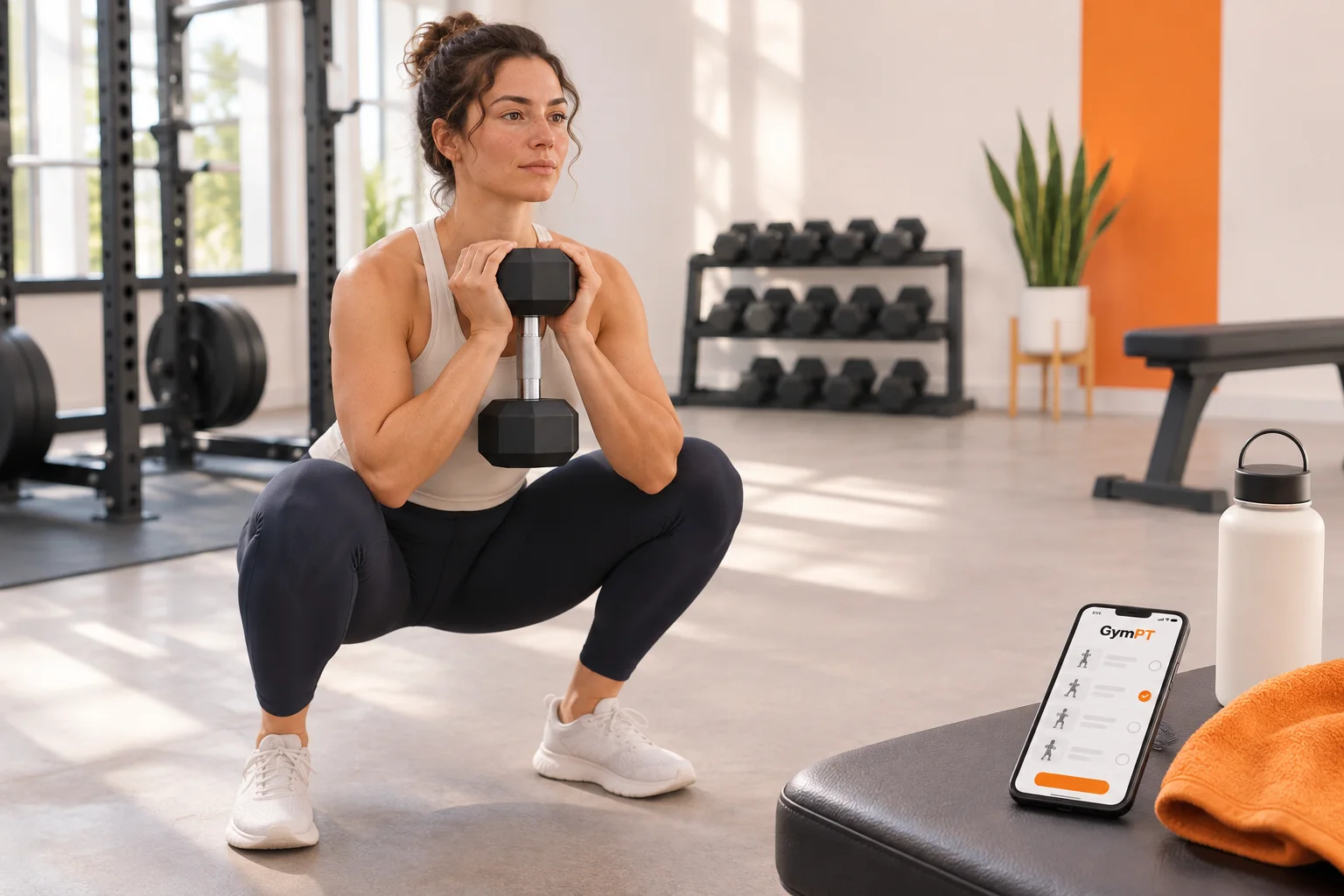
A good 2 day gym workout plan is not a rushed version of a five-day split. It is a schedule built around two focused sessions that train the major muscle groups, leave room for recovery and are realistic to repeat. For many people, two workouts a week are easier to fit around work, family and other activities than a more frequent routine.
The key is to plan both sessions deliberately. A practical starting point is to train your whole body on each day, use a manageable number of exercises, and add a little work only when you can recover and keep your technique consistent. Here is a flexible template, plus ways to adapt it to your experience and schedule.
How to structure a 2 day gym workout plan
For a twice-weekly routine, full-body sessions are a straightforward choice: each workout can include a knee-dominant leg movement, a hip hinge, a push, a pull and optional core or accessory work. That way, the main movement patterns show up in both sessions rather than being assigned to a single day that might be missed.
Adults are generally advised to do muscle-strengthening activity involving all major muscle groups on at least two days each week. That is a useful planning reference, not a promise that one exact routine is right for everybody. Research reviews also indicate that training frequency alone does not determine results when weekly training volume is comparable; the schedule should help you complete quality work consistently.
Choose days you can protect
For example, train Monday and Thursday, Tuesday and Saturday, or Wednesday and Sunday. Leaving a day or two between sessions gives you time away from lifting before the next full-body workout. The exact gap is not a magic number: consider how you feel, the effort of the previous session and other physical activity in your week.
If you prefer to divide the week into upper-body and lower-body days, that is another option. Compare the structure in this two-day upper-lower workout plan and choose the layout you find easier to follow.
A practical two-day full-body workout template
Use the following as a starting framework, not a test you need to complete at any cost. Choose a version of each movement that feels controlled and suits the equipment available. Begin with two working sets per exercise; if you are new or returning after a break, one or two sets may be enough to learn the routine before adding more.
Workout A
- Leg press or goblet squat: 2–3 sets of 6–10 repetitions
- Dumbbell bench press or machine chest press: 2–3 sets of 6–12 repetitions
- Seated cable row or chest-supported row: 2–3 sets of 8–12 repetitions
- Romanian deadlift with dumbbells or a barbell: 2 sets of 8–10 repetitions
- Plank or dead bug: 2 controlled sets
Workout B
- Split squat or step-up: 2–3 sets of 8–10 repetitions per side
- Lat pulldown or assisted pull-up: 2–3 sets of 8–12 repetitions
- Incline dumbbell press or push-up: 2–3 sets of 8–12 repetitions
- Hip thrust or hamstring curl: 2–3 sets of 8–12 repetitions
- Side plank or cable anti-rotation press: 2 controlled sets per side
Rest long enough between sets to repeat the next set with stable technique. Heavier or more demanding movements may need more rest than smaller accessory exercises. If your form deteriorates or you cannot reach the planned range with control, reduce the load or choose an easier variation.
Adjust the plan to your training level
If you are a beginner
Start with two sets for each exercise and choose familiar machines or simple dumbbell variations. Use a load that lets you finish each set with steady technique and a sense that you could still perform a few more good repetitions. You do not need to test your maximum or train every set until you cannot move the weight. Repeat the same exercise choices for several weeks so you can learn them and compare your records.
If you have some lifting experience
Keep the same two-day structure, then adjust the amount of work to fit your goals and recovery. You might use three sets for one or two priority movements, while keeping other exercises at two sets. If one session is consistently too long, trim accessory work before rushing the main lifts or removing rest between demanding sets.
If you are returning after time away
Use familiar, comfortable exercises and begin with fewer sets or lighter loads than you used before the break. Treat the first couple of weeks as a chance to re-establish the routine, not to prove what you could lift previously. If an exercise causes pain or feels unsuitable, stop and choose a comfortable alternative. For individual concerns about exercise, seek advice from an appropriately qualified professional.
How to progress without changing everything
Progress is easier to judge when you keep a record of your exercises, loads, repetitions and sets. Pick a repetition range, such as 8–12. When you can complete the top end of that range for every set with consistent form, increase the load by a small amount at a later session, then build repetitions again. If the new load makes your form less controlled, reduce it and continue building gradually.
- Choose a repeatable variation. Stick with the same movement long enough to assess it.
- Record the work. Note the load, sets and repetitions you actually completed.
- Progress one thing at a time. Add a repetition, a small amount of load or a set when appropriate—not all at once.
- Review the trend. Look across several workouts rather than judging progress from one unusually good or difficult day.
There is no requirement to increase something every workout. If your schedule was disrupted, sleep was poor or a set felt unusually difficult, repeating the same workload can be a sensible choice. If you want a different split or more weekly sessions later, browse the three-day upper, lower and full-body plan and five-day full-body plan before making a change.
Recovery and weekly scheduling
Recovery is part of the plan, not a bonus session. Keep non-lifting days available for rest or other activity you enjoy, and avoid turning every rest day into another hard workout for the same muscles. If you feel unready for the second session, consider reducing the load or number of sets rather than forcing the planned numbers.
Strength training is only one part of an active week. Walking, cycling or other aerobic activity can fit on separate days or around your schedule, provided the total workload remains manageable. If you add a new activity, give yourself time to see how it affects your energy and training before adding more.
Make the plan easy to follow
A routine works best when the next session is clear. Save your chosen exercises and record what you complete so you can pick up where you left off. In GymPT, members can build a manual program without AI credits and save training records with a free account. If you have a trainer, they may prepare a program proposal for you to review; you decide whether to save and use it. A trainer can only review the programs, workout records and notes you permit them to see.
If you use optional AI support to help organize a plan, check that the suggested exercises, sets and progression match your experience and available equipment. AI can assist with planning, but it does not replace your judgment or a real trainer’s professional input. For a useful checklist on evaluating a generated plan, read how to check a strength plan before you lift.
Keep the routine simple enough to repeat
A strong two-day routine does not need a complicated split or a new set of exercises every week. Choose two days you can usually protect, train the main movement patterns in both sessions, start with manageable work and record what you do. Then progress gradually when your technique and recovery support it. The best version is the one you can return to week after week.